Leave Your Message
0%

As power networks continue to grow in coastal, industrial, and desert areas, the importance of reliable insulation becomes more and more critical. This guide takes a closer look at the top anti-pollution glass insulator manufacturers for 2026, focusing on practical engineering benchmarks rather than flashy marketing pitches. We’re mainly interested in things like consistent product quality, testing capabilities, delivery performance, and real-world experience.

When it comes to anti-pollution glass insulator designs, they’ve got to handle all kinds of harsh conditions—think salt buildup, cement dust, chemicals, and long dry spells with little rain. Clear glass bodies are actually pretty handy because cracks are easier to spot during inspections. Plus, toughened glass offers solid mechanical strength and remains visible even after electrical failure. But looks only tell part of the story; performance depends on several other factors too—like creepage distance, shed shapes, cement quality, galvanizing control, and hardware precision—all of which need to be carefully checked.

Testing is pretty important, no doubt.

The manufacturers listed here should show they meet the relevant IEC standards and have reliable quality management systems. Evidence of this can come from type-test reports, routine check records, batch traceability, and documented lab procedures. ISO 9001 certification can give you some confidence, but don’t rely on it alone—make sure to do your own technical checks too. It’s a good idea to compare how these insulators perform under real service conditions, such as different voltage levels, altitudes, humidity, and maintenance accessibility.

Of course, rankings aren’t ever perfect. Different suppliers might use various testing methods, and actual results can vary region to region. So, this guide treats reputation as just one factor, not the ultimate proof. It’s always smart for utilities, EPC contractors, and distributors to request samples, inspect manufacturing practices, and double-check warranty terms before making a call. The best manufacturers are those who combine solid engineering know-how with responsive support, especially when a single damaged insulator string could impact an entire transmission corridor. Bottom line: choose wisely and don’t skip the due diligence.

Hope this helps you get a clearer picture—good luck with your selections!

2026 Top Anti Pollution Glass Insulator Manufacturers?

Definition and Role of Anti-Pollution Glass Insulators

Definition and Role of Anti-Pollution Glass Insulators

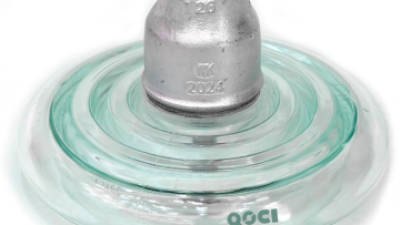
Anti-pollution glass insulators are outdoor electrical insulators designed to resist contamination from dust, salt, smoke, and industrial particles. Their main role is preventing leakage current from developing into a surface flashover. Toughened glass provides strong dielectric performance and visible failure evidence. When damaged, the glass usually shatters, making inspection more practical from the ground.

The International Electrotechnical Commission classifies outdoor pollution into four severity levels under IEC 60815: light, medium, heavy, and very heavy.

This classification guides Creepage Distance, material selection, and installation design.CIGRE Technical Brochure 158 explains that wet pollution layers can conduct electricity across an insulator surface. Salt deposits near coastal lines are especially aggressive. Even a clean-looking string can carry invisible contamination.

Field engineers often compare leakage-current records, local pollution maps, and historical flashover data before selecting an insulator. Longer creepage paths may improve safety, but they can increase weight and cost.

There is no universal “anti-pollution” solution. This is where some specifications become too optimistic. Regular washing, proper fittings, and accurate site assessment still matter.

A 2024 IEEE reliability review also links environmental exposure with higher maintenance demands on overhead networks. Manufacturers should therefore publish test methods, pollution-class assumptions, and mechanical ratings, not only marketing claims.

Key Performance Standards for Anti-Pollution Glass Insulators

For a 2026 procurement review, anti-pollution glass insulators should be judged by measurable performance, not catalog language. IEC 60383-1 supports electrical and mechanical verification for suspension insulators. IEC 60815 helps engineers select creepage distances for different pollution environments. Coastal salt, cement dust, and industrial smoke require different design margins.

Creepage distance is a practical starting point. A longer leakage path can reduce surface flashover risk, but excessive length may increase weight and cost. Insulator strings should also withstand specified dry and wet power-frequency tests. Lightning impulse performance matters where overhead lines face frequent storms. Mechanical strength must match the conductor load, wind pressure, and installation tension.

Look for results from salt-fog, tracking, and erosion tests. Ask whether testing used realistic contamination levels and repeated wetting. Small defects in glass, metal fittings, or cement joints can become serious after years of thermal cycling. Visual inspection is still useful. No test replaces site evidence.

Manufacturers with reliable quality systems should provide traceable batch records, dimensional checks, and laboratory reports. Factory process control deserves attention, especially for glass tempering and end-fitting assembly. I would question any supplier offering one universal design for every pollution class. That claim sounds convenient, but field conditions are rarely so simple. Actual service data should influence the final selection.

Top Anti-Pollution Glass Insulator Manufacturers in 2026

Top Anti-Pollution Glass Insulator Manufacturers in 2026

In 2026, leading anti-pollution glass insulator manufacturers are judged by field performance, not catalog claims. Their designs must handle salt, cement dust, industrial smoke, and long wetting periods. IEC 60815 provides guidance on creepage distance and pollution severity. Reliable producers use these principles during product design and testing.

The IEA Electricity 2025 report forecasts global electricity demand to grow by about 4% annually through 2027. This expansion increases pressure on transmission networks and replacement programs. Manufacturers with automated glass forming, controlled tempering, and strict dimensional inspection deserve closer attention. CIGRE technical guidance also stresses pollution testing, surface behavior, and accurate site data. Small production errors matter.

Real projects reveal more than brochures. Buyers should examine leakage-current results, mechanical failure records, coating durability, and test reports from independent laboratories. Toughened glass offers visible damage after breakage, which can simplify maintenance inspections. It is not flawless. Poor shed spacing or unsuitable hardware can still reduce performance in heavy contamination.

A practical shortlist should include factories with traceable raw materials, documented quality systems, and experience in coastal or high-dust corridors. Ask for five-year field evidence, not only laboratory certificates. That evidence may be incomplete, but ignoring it is worse. The best 2026 manufacturers will combine pollution-specific engineering, stable production, and honest limits.

Top Anti-Pollution Glass Insulator Manufacturers in 2026

This chart compares the recommended unified specific creepage distance for four pollution-severity classes according to IEC 60815-1 design guidance. Higher values indicate greater surface leakage protection requirements for glass insulators used in contaminated environments. The figures are engineering benchmarks rather than company-specific performance data.

Manufacturing Technologies Used by Leading Insulator Producers

2026 Top Anti Pollution Glass Insulator Manufacturers?

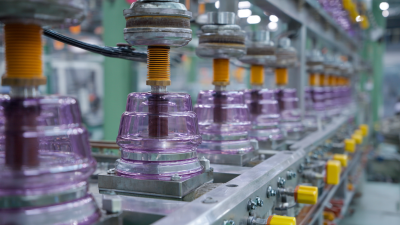
Leading anti-pollution glass insulator producers now combine toughened glass, precision molding, and controlled surface design. IEC 60815-1 classifies outdoor pollution into four severity levels, guiding creepage distance and material selection. Manufacturers use automated forming lines to control glass thickness within tight tolerances. Small deviations can create uneven electric fields. This is where factory experience still matters.

Computer-controlled annealing removes internal stress before visual and mechanical inspection. High-speed cameras detect cracks, bubbles, and surface defects that manual checks may miss. Salt-fog laboratories then evaluate pollution flashover performance under controlled conditions. IEC 60507 remains a key reference for artificial pollution testing. CIGRE technical guidance also stresses site-specific contamination data, not simple laboratory rankings. Coastal salt, cement dust, and industrial deposits behave differently.

Many producers now apply hydrophobic silicone coatings to improve water beading and reduce leakage current. Yet coating durability remains difficult to predict. A 2024 market analysis by Grand View Research projects continued growth in the global insulator sector, driven by grid expansion and renewable connections. The number is useful, but market forecasts are not field evidence. Reliable suppliers should combine factory test records, IEC compliance documents, and long-term inspection data. Sometimes, the clearest warning is an imperfect surface.

2026 Top Anti Pollution Glass Insulator Manufacturers? - Manufacturing Technologies Used by Leading Insulator Producers

Manufacturing Dimension Technology or Product Feature Typical Technical Data Pollution-Resistance Benefit Common Verification Method
Insulator Material Toughened soda-lime-silicate electrical glass Tempered glass is used to improve mechanical strength and provide a visible fracture pattern after failure. Non-porous glass surfaces do not absorb moisture or soluble contaminants, supporting easier cleaning and stable insulation performance. Material inspection, thermal-shock testing, mechanical load testing, and routine visual examination.
Glass Forming Controlled pressing or centrifugal forming of insulator shells Automated forming controls the profile, thickness, concentricity, and dimensional repeatability of each glass unit. Consistent shed geometry helps maintain the designed creepage path and reduces local electric-field concentration. Dimensional measurement, profile gauges, weight checks, and surface-defect inspection.
Thermal Toughening Rapid and controlled cooling after heating The glass is heated and then rapidly cooled to create compressive stress at the surface and tensile stress inside the body. Improves resistance to mechanical impact and thermal variation during outdoor service. Fragmentation test, thermal-shock test, optical stress inspection, and mechanical strength testing.
Anti-Pollution Profile Deep-shed or aerodynamic shed design Designs use longer creepage paths, larger protected areas, and drainage-friendly shed geometry; exact dimensions depend on voltage and site severity. Limits the formation of a continuous wet pollution layer and reduces the risk of surface flashover in coastal, industrial, and desert environments. Creepage-distance measurement, wet pollution tests, salt-fog tests, and artificial-contamination tests.
Creepage Design Increased creepage distance for contaminated locations IEC 60815 design practice commonly classifies pollution severity from very light to very heavy and selects creepage requirements accordingly. Provides a longer leakage path so that surface current is less likely to develop into a damaging dry-band arc. Electrical design review, creepage measurement, leakage-current monitoring, and pollution-performance testing.
Surface Quality High-quality glaze and controlled surface finishing Smooth, defect-controlled surfaces reduce sharp edges, inclusions, scratches, and localized contamination-retention points. Helps reduce water retention and supports more uniform surface wetting and contamination behavior. Visual inspection, surface roughness checks where specified, optical inspection, and dielectric testing.
Cementing and Fittings Precision assembly with galvanized or corrosion-resistant metal fittings Glass units are assembled with metal caps and pins using controlled cementing, alignment, and curing procedures. Accurate alignment maintains string geometry, while corrosion-resistant fittings support long-term outdoor reliability. Dimensional inspection, bond-quality checks, tensile testing, galvanizing inspection, and corrosion evaluation.
Quality Control Automated inspection combined with routine electrical testing Typical controls include dimensional checks, visual inspection, mechanical verification, power-frequency tests, and puncture or dielectric tests as specified by the applicable standard. Detects manufacturing defects that could reduce insulation strength or increase the probability of pollution-related flashover. IEC 60383-1 type and routine test procedures, customer specifications, and utility acceptance requirements.
Environmental Performance Resistance to ultraviolet exposure, moisture, salt, and industrial deposits Performance is evaluated according to the installation environment, contamination composition, wetting conditions, and required service voltage. Supports reliable operation in coastal salt spray, cement dust, chemical pollution, agricultural deposits, and arid regions. Salt-fog testing, artificial-pollution testing, climatic exposure, thermal cycling, and field monitoring.
Sustainability Recyclable glass body and process scrap recovery Glass is an inorganic material that can be recycled; production lines may recover cullet and reuse compatible process water. Reduces material waste and supports lower resource consumption over the product life cycle. Material traceability, recycled-content records, waste audits, and environmental-management procedures.

Technical values and design choices vary according to rated voltage, pollution severity, altitude, mechanical class, installation configuration, and applicable utility specifications. International design and test practices commonly reference IEC 60383-1 and IEC 60815.

How to Compare Quality, Reliability, and Product Certifications

2026 Top Anti Pollution Glass Insulator Manufacturers?

Comparing manufacturers requires more than checking catalogue photos. Examine the glass body, cement joint, metal fittings, and sealing quality. A well-designed anti-pollution insulator usually provides a longer creepage distance and better surface performance in salt, dust, or industrial fog. Ask for IEC 60383 test records, pollution performance data, and routine inspection results. Certificates should match the exact product series, not only the factory name.

Reliability appears in details. Request batch traceability, dimensional records, thermal shock results, and mechanical load reports. A serious manufacturer can explain how defects are detected before shipment. ISO 9001 supports process control, while ISO 14001 shows environmental management. Neither certificate alone proves field durability. Review certificate scope, issuing body, validity, and recent surveillance records. Factory audits are useful, but they can miss problems if production conditions change afterward.

Tips:
Compare at least three test reports from different production batches. Check whether samples were tested after realistic contamination, not only in clean laboratory conditions. Ask for photographs of inspection stations and packed goods. Look for consistent glass color, smooth cement edges, and undamaged fittings. Small flaws matter. A clean certificate file can still hide weak process control. In my experience, suppliers sometimes present impressive peak-load figures without explaining long-term aging. That gap deserves a direct question. Reliability is proven through repeatable evidence, not confident promises.

Applications and Regional Demand for Anti-Pollution Glass Insulators

Anti-Pollution Glass Insulators: Applications and Regional Demand in 2026

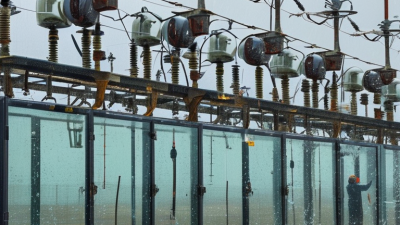
Anti-pollution glass insulators are gaining attention as power networks expand near coastlines, factories, deserts, and dense cities. The IEA Electricity 2024 report expects global electricity demand to increase by more than 2,500 TWh between 2024 and 2026. This growth supports new transmission lines, substations, and distribution upgrades. Glass insulators are used on high-voltage lines because their smooth surfaces can reduce contamination adhesion and simplify visual inspection.

Regional demand varies sharply. Coastal Asia and the Middle East face salt deposits, dust, and high surface temperatures. Tropical regions add heavy rainfall and rapid pollution washing. Industrial areas in Europe and North America often require stronger insulation coordination around cement plants, steel facilities, and chemical production zones. IEC 60815 recommends selecting insulators according to pollution severity, site conditions, and creepage distance. That guidance matters more than choosing by voltage alone.

CIGRE technical studies also emphasize field pollution measurements and maintenance planning. A manufacturer serving these markets should provide tested designs, reliable seals, and traceable quality records. Long creepage profiles may improve performance, but they can increase weight and cleaning difficulty. That trade-off is often overlooked. In practice, utilities compare flashover performance, mechanical strength, inspection visibility, and lifecycle cost. The IEA forecast is encouraging, yet demand estimates remain imperfect because grid investment depends on permitting, financing, and local climate data. Real project evidence should guide final specifications.

PS-70E Toughened Suspension Glass Insulator: Design, Performance, and Grid Applications

PS-70E toughened suspension glass insulators are designed for electrical insulation and mechanical support in overhead transmission networks, switchgear, and high-voltage substations operating at 6, 10 kV and above. Their role includes securing unprotected conductors and lightning-protection cables while maintaining reliable clearance from grounded structures. Toughened glass provides strong resistance to mechanical loading, temperature variation, and weather exposure. Its transparent body also supports visual inspection, while a damaged unit can be identified more readily through characteristic shattering, helping maintenance teams locate insulation faults.

Grid reinforcement is becoming increasingly important as electricity demand and renewable generation expand. The International Energy Agency’s *Electricity 2024* report projects global electricity demand to grow by an average of about 4% annually from 2024 to 2026. In addition, the International Renewable Energy Agency reported approximately 473 GW of renewable capacity additions in 2023, representing more than 85% of total new power capacity. These trends require durable insulation components for extended overhead lines, substations, and connection points exposed to wind, rain, pollution, and lightning activity.

For network designers, PS-70E units can be evaluated according to rated voltage, mechanical strength, creepage distance, pollution conditions, and compliance with applicable IEC requirements. Their use in suspension assemblies supports dependable conductor positioning and helps reduce outage risks during routine operation. Proper selection, installation, and periodic inspection remain essential for achieving stable performance across expanding medium- and high-voltage grid infrastructure.

FAQS

What are anti-pollution glass insulators designed to resist?

They resist salt, cement dust, industrial smoke, and long wetting periods. Conditions vary widely.

Where are these insulators commonly used?

They serve transmission lines and substations near coastlines, factories, deserts, and crowded cities.

Why does pollution severity matter more than voltage alone?

Salt and dust can create conductive paths across wet surfaces. Voltage alone cannot describe that risk.

How does glass help during maintenance inspections?

Toughened glass shows visible damage after breakage. Workers can spot damaged units from the ground more easily.

What should buyers request from manufacturers?

Request leakage-current results, mechanical records, coating data, and independent laboratory reports. Ask for field evidence, too.

How long should field performance be reviewed?

A five-year record can reveal weathering, flashovers, and maintenance problems. It may still be incomplete.

Can a longer creepage distance solve heavy pollution problems?

It may improve insulation performance. However, it can increase weight and make cleaning more difficult.

Which production controls deserve close attention?

Controlled glass forming, stable tempering, traceable materials, and strict dimensional inspections are important. Small errors matter.

What regional conditions influence insulator selection?

Coastal regions face salt deposits, while deserts bring dust and heat. Tropical areas add heavy rain and rapid washing.

Are anti-pollution glass insulators completely maintenance-free?

No. Poor spacing, unsuitable hardware, or unexpected contamination can still reduce performance. That limitation deserves attention.

Conclusion

This article presents a practical overview of the 2026 Anti-Pollution Glass Insulator market, beginning with the role of these insulators in maintaining reliable power transmission in coastal, industrial, desert, and heavily polluted environments. It explains how their glass composition, shed design, surface performance, and self-cleaning characteristics help reduce contamination-related flashovers. The discussion also introduces key performance standards, including mechanical strength, electrical endurance, environmental resistance, quality consistency, and certification requirements.

Readers will learn how to evaluate leading manufacturers without relying on brand reputation alone. The article compares production technologies such as precision forming, controlled tempering, automated inspection, and advanced testing procedures. It also outlines practical methods for assessing product quality, long-term reliability, documentation, and compliance. Finally, it reviews major applications in overhead transmission and distribution networks, substations, renewable energy projects, and high-pollution regions, while highlighting how regional climate, infrastructure investment, and grid modernization are shaping demand in 2026.

Charlotte

Charlotte

Charlotte is a dedicated marketing professional at Jiangxi QOCI Electric Co. Ltd., a leading company founded in December 2002 and located in Jiangxi Province, China. With a profound expertise in glass insulators, Charlotte plays a pivotal role in showcasing the company’s innovative products and......
Previous China Top 10 Green Glass Electrical Insulator Manufacturers