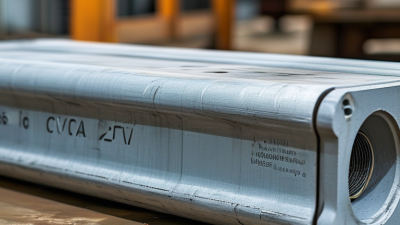
China's become a key player when it comes to sourcing RF components, but just because you get the lowest quote doesn't necessarily mean you're getting the best deal. Take a CTV-254 isolator, for example—it's crucial to evaluate it carefully. Things like insertion loss, isolation level, frequency range, power handling capacity, connector quality, and operating temperature all matter. These details directly impact how well the device performs and what you’ll end up paying in the long run. Plus, they help you spot if a supplier's claims don’t quite add up.
According to Grand View Research, the global RF front-end module market is expected to keep growing at a double-digit rate all the way through 2030. This trend is driven by expanding wireless infrastructure, more testing equipment, and the rise of high-frequency communication systems. Naturally, this means there’s higher demand for reliable isolators, including compact CTV-254 models. But, just because the market is booming doesn’t mean every model you see is genuinely up to snuff—that’s something you’ll need to verify with actual proof.
A trustworthy supplier from China should be able to give you a current datasheet, real test curves, photos of their production process, and details about their quality control procedures. Certifications like ISO 9001 can indicate solid process management, and IEC 60529 testing can show whether their enclosures meet protection standards—especially if that’s relevant for your application. Don’t forget to ask for the actual testing frequency, the measured insertion loss, isolation levels, and maximum input power. It’s these small details that can save you headaches later on.
Pricing can vary quite a bit depending on the connector type, order volume, customization needs, packaging, and testing requirements. Sometimes, what’s listed publicly might seem super cheap, but don’t forget to account for extra costs like shipping, certification, or sample testing. We’ve seen cases where skipping these details caused delays and added unexpected expenses. To really make an informed decision, compare all aspects—unit price, lead times, warranty, minimum order quantities, and after-sales support. Remember, there's no one-size-fits-all “best” supplier. The key is choosing someone whose verified performance, transparency, and terms match your specific needs.
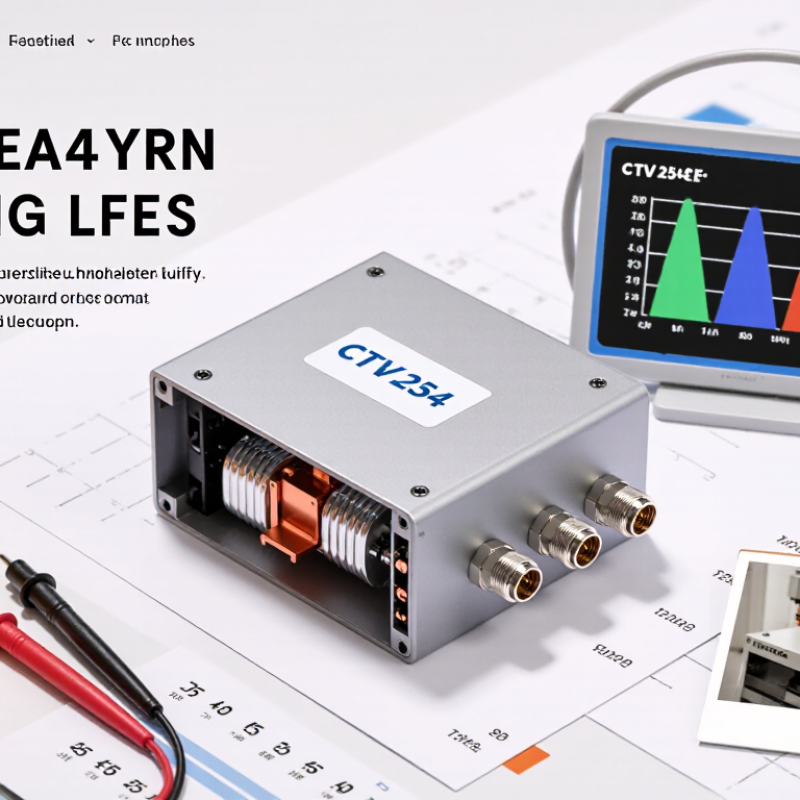
A CTV 254 Isolatorprovides visible electrical separation during maintenance. It is not designed to interrupt heavy fault current. Operators normally open it after the circuit is de-energized and verified safe. Its main structure includes an insulating body, fixed contacts, moving contacts, terminals, and mounting hardware. The insulation must resist voltage stress, moisture, dust, and mechanical vibration. Clearances and Creepage Distances are especially important around exposed terminals.
CTV 254 isolators can serve distribution panels, transformer connections, and outdoor switching assemblies. In 50 Hz and 60 Hz systems, the basic isolation function remains similar. However, rated voltage, current, insulation level, temperature rise, and short-time withstand ratings must match the installation. The designation alone may not confirm every specification. My first assumption could be wrong without a technical datasheet. A reliable supplier should provide dimensional drawings, routine test records, material details, and traceable quality documents. Price matters, but a low quote may exclude testing or suitable mounting parts.
Tips: Confirm the frequency, system voltage, current, and installation environment before requesting a quotation. Check contact alignment by hand before energizing. Measure insulation resistance with approved test equipment. Never treat an isolator as a circuit breaker. During inspection, small signs matter, such as cracked insulation, loose hardware, or darkened contacts. Suppliers should explain warranty terms and replacement lead times clearly.
When buyers search “China Best CTV 254 Isolator Price and Supplier,” technical evidence matters more than a low quotation. For the CTV 254, confirm rated operational voltage (Ue), rated insulation voltage (Ui), and rated current (Ie). These values must match the installation’s supply system, load, and switching duty. Do not rely on a product code alone. The exact configuration may change the electrical ratings.
A dependable datasheet should state the IP rating, pole arrangement, terminal capacity, and operating category. IP protection describes resistance to solid objects and water, but installation quality still affects real protection. The isolator should be assessed against IEC 60947-3, covering low-voltage switchgear and controlgear requirements. Check markings, test reports, temperature limits, and mechanical endurance before comparing suppliers. In practice, unclear labels are a warning. A professional supplier should provide traceable documents, sample inspection support, and consistent batch information.
Tips: Ask for the complete CTV 254 datasheet, not a cropped catalogue image. Request Ue, Ui, Ie, IP rating, short-circuit suitability, and IEC 60947-3 test evidence in writing. Compare price only after confirming copper terminals, enclosure material, certification scope, and delivery terms. One detail is easy to miss: verify whether the quoted current applies continuously or under a stated utilization category. I would also inspect screw torque guidance and terminal spacing, because small installation details can undermine a correct rating. Specifications can look convincing. Field verification remains necessary.
For a CTV 254 isolator, China factory pricing usually depends on material, voltage rating, surface finish, and inspection requirements. A practical planning range is about US$2.80–6.50 per unit for standard specifications at 1,000 pieces. Typical MOQs range from 500 to 2,000 units. Standard production often takes 15–30 working days, while new tooling may extend delivery to 30–60 days. Confirm the drawing before comparing quotations. “CTV 254” can describe different dimensions across suppliers.
Landed cost includes the unit price, export packing, inland transport, freight, insurance, customs duty, VAT, and broker fees. UN Comtrade data places many electrical insulators under HS 8546, but classification can vary by material and application. The World Bank’s 2023 Logistics Performance Index gave China a 3.7 score and ranked it 19th, supporting its strong export infrastructure. However, freight remains unstable. UNCTAD’s Review of Maritime Transport 2023 reported global container capacity growth of about 3.8%, yet shipping prices still change by route and season. For a real quotation, request batch test records, dielectric results, dimensional tolerance, and packaging photos. Small details matter. A low factory price can become expensive after breakage, rework, or delayed customs clearance. I would also allow a 5–10% contingency, because initial supplier estimates are not always complete.
When comparing CTV 254 isolator suppliers, price should not be the only measure. A reliable supplier should provide a valid ISO 9001 certificate, issued by a recognized certification body. Check its scope, expiry date, and registered factory address. Ask for evidence. A certificate copied into a quotation proves very little.
A factory audit should examine raw material control, molding, firing, glazing, and final inspection. Inspectors should review batch records and product traceability. They should also compare drawings with actual dimensions. Production areas should be clean, organized, and properly documented. One practical mistake is trusting a polished showroom too quickly. The real evidence is often in storage labels, inspection sheets, and rejected-product records.
Testing must match the CTV 254 isolator’s technical requirements. Request recent reports for mechanical strength, power-frequency withstand, impulse withstand, dimensional accuracy, and visual defects. Confirm test dates, sample identification, equipment calibration, and laboratory qualifications. Independent testing can reduce uncertainty when the order is large. Still, one report may not represent every production batch. That is an important limitation. Compare several reports and request pre-shipment inspection. Suppliers should explain packing methods, moisture protection, replacement terms, and delivery controls. A slightly higher price may be reasonable when documentation, testing, and traceability are consistently stronger.
China Best CTV 254 Isolator Price and Supplier?
When comparing CTV 254 isolators, price should follow verified performance, not only factory quotations. A reliable supplier should provide batch records, material details, dimensional reports, and clear test conditions. In practical quality checks, temperature rise is measured after the isolator reaches thermal stability. Tests should record ambient temperature, current, contact points, and the highest surface reading. A small, well-calibrated thermocouple helps reveal local heating that a general infrared scan may miss.
Dielectric strength testing needs controlled voltage increases and documented leakage current. The test voltage must match the product specification and the intended operating environment. Inspectors should check for flashover, puncture, surface tracking, and visible cracking. Endurance cycles are equally important. Repeated switching or mechanical movement can expose weak insulation, loose fittings, or changes in contact pressure. Record the cycle count and inspect the part at regular intervals.
Small details matter.
A supplier may show excellent initial readings but provide limited endurance evidence. That gap deserves attention. Price comparisons are more useful when they include testing, packaging, traceability, and replacement terms. No inspection plan is perfect. Humidity, fixture design, and operator technique can affect results. For this reason, independent verification is worthwhile before approving a large order, especially when the quoted CTV 254 price seems unusually low.
Comparing CTV 254 isolator suppliers requires more than checking the lowest quotation. Ask for certificates covering the actual product and production site, not a generic company file. An ISO 9001 certificate shows process control, but it does not prove electrical performance. Request current IEC or applicable national-standard test reports, routine test records, and material traceability for each batch.
Warranty terms deserve careful reading. Reliable suppliers usually state coverage, inspection duties, replacement procedures, and response times in writing. A 12- or 24-month warranty may appear attractive, yet exclusions can weaken its value. Confirm whether transport damage, installation errors, and early failures are handled separately. Ask for photographs of packing, labeling, and pre-shipment inspections. Small details matter.
Export capacity is visible in practical evidence. Check production lead time, monthly output, export destinations, customs documents, and port experience. Suppliers should explain how CTV 254 units are protected against moisture, impact, and vibration during long-distance shipping. Compare prices under the same Incoterm, quantity, voltage class, fittings, testing, and packaging. Otherwise, the cheapest offer is not comparable. My own caution is simple: documents can be complete while factory consistency remains uncertain. A remote audit helps, but an independent inspection is stronger. Reliability needs proof.
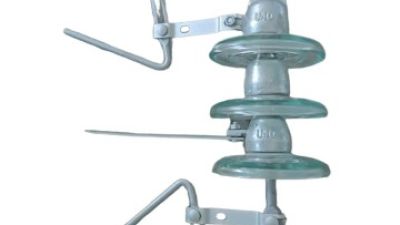
The CTV 175 ground-wire insulator is designed to support overhead shield wires while maintaining reliable electrical separation from towers and other structural components. Its compact profile, mechanical strength, and weather-resistant insulation make it suitable for transmission and distribution networks exposed to wind, rain, dust, and temperature changes. When used with a 30 kV anchor insulator string and horn spark gaps, the assembly can help control flashover paths and protect line hardware during abnormal voltage conditions.
For higher-voltage installations, CTV 254 and CTV 175 U70 120 kN glass disc insulators can be arranged in multi-storey, duplex, or triple strings. These configurations provide flexible insulation levels and increased mechanical capacity for long spans, heavy conductors, and demanding tower layouts. Glass discs also allow visible inspection of the insulating body, helping maintenance teams identify damage or contamination during routine checks.
Selection should consider system voltage, required creepage distance, rated mechanical load, tower geometry, pollution severity, altitude, and local climate. Engineers should also verify the correct coupling dimensions, arcing-horn arrangement, string length, and clearance from grounded structures. For ground-wire applications, the final design must coordinate insulation performance with lightning protection, fault-current requirements, and the intended installation environment.
It provides visible electrical separation during maintenance. It is not a circuit breaker.
No. It should not interrupt heavy fault current.
Typical parts include an insulating body, fixed contacts, moving contacts, terminals, and mounting hardware.
The basic isolation function remains similar at both frequencies.
Common applications include distribution panels, transformer connections, and outdoor switching assemblies.
Confirm system frequency, voltage, current, dimensions, and installation conditions.
Standard specifications may cost about US$2.80–6.50 per unit at 1,000 pieces.
Standard production often requires 15–30 working days.
Include unit price, export packing, inland transport, freight, insurance, duties, taxes, and broker fees.
The Ctv 254 Isolator is a practical switching and isolation device designed for safe control of electrical circuits in 50/60 Hz applications. Its structure typically includes insulated housing, conductive contacts, operating components, and connection terminals. When selecting a model, buyers should review rated voltage, current capacity, enclosure protection, and compliance with IEC 60947-3. These specifications help ensure reliable performance under the intended operating and environmental conditions.
China offers a wide range of CTV 254 isolator suppliers, with pricing influenced by order quantity, customization, production lead time, packaging, shipping, and total landed cost. Buyers should verify suppliers through ISO 9001 documentation, factory audits, sample testing, and clear quality records. Important checks include temperature-rise testing, dielectric-strength verification, mechanical and electrical endurance cycles, and inspection of materials and assembly quality. Comparing suppliers by certifications, warranty terms, production capacity, export experience, communication, and after-sales support can help purchasers achieve a balanced combination of price, reliability, and long-term service.