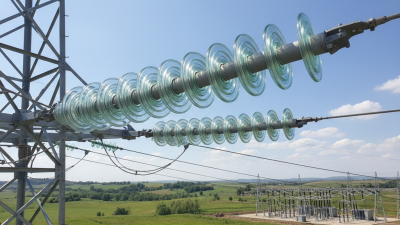
China’s glass Insulator 160b market is really starting to gain importance as utilities are pushing to expand their transmission lines and update old, worn-out components. According to the International Energy Agency’s Electricity 2024 report, global electricity demand is expected to grow by roughly 3.4% each year from 2024 through 2026. That kind of growth puts extra pressure on the grid’s reliability, makes procurement speed a hot topic, and really emphasizes the need for high-quality components.
Now, price isn’t the only thing buyers should be thinking about. Factors like factory controls, testing records, how the packaging’s done, and export experience can all impact the final cost. For a Glass Insulator 160b, it’s really important to check its mechanical strength, electrical performance, dimensional accuracy, and whether it meets the IEC standards. Also, keep in mind that the “160b” label can sometimes vary between different manufacturers—so, yeah, it’s worth double-checking those details.
Dr. Fatih Birol, the head of the International Energy Agency, put it pretty well when he said, “The world is entering a new industrial age—the age of clean energy technology manufacturing.” That really hits home because it’s clear that the hardware supporting our grids needs to keep up with faster energy development, without dropping the ball on reliability. The IEA’s reports on Grid Modernization also point out that investing in transmission infrastructure and resilient equipment are truly key for future power systems.
In this guide, I’ll walk you through how China’s Glass Insulator 160b prices stack up, what capabilities suppliers have, their testing practices, and delivery options. But I’ll also look beyond just the product price—things like freight, inspection fees, tooling costs, insurance, and the risk of having to replace parts quietly add up and can really impact your overall budget. Sometimes, supplier claims sound pretty impressive on paper, but they still need to be checked out carefully. That’s where I stay practical and a little skeptical—good decisions always come down to detailed documents, samples, and proven performance data.

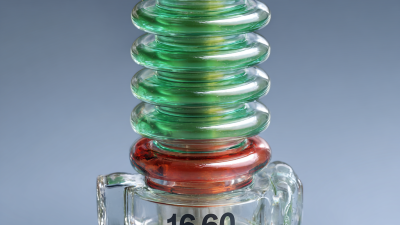
The Glass Insulator 160B is commonly used in high-voltage overhead transmission strings. Its 160 kN rating indicates the specified mechanical failing load. Toughened Glass provides a smooth surface and clear visual evidence after damage. Broken glass usually falls away, making inspection faster from ground level.
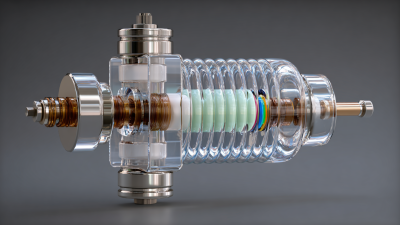
Typical designs use a cap-and-pin structure, with dimensions based on applicable IEC requirements. Common references include a 280 mm disc diameter and a 146 mm nominal spacing. However, creepage distance, coupling hardware, and electrical performance can vary. Always check the approved drawing before ordering. A supplier should provide routine test records, material details, dimensional reports, and batch traceability. These documents matter more than polished product photographs.
Price depends on order quantity, glass formulation, fittings, testing, packaging, and delivery terms. Ask suppliers to separate the insulator price from hardware and freight costs. A low quotation may exclude export packing or inspection fees. That can become expensive later. Experienced buyers should request samples or a controlled pre-shipment inspection. I would also examine edge chips, cement cracks, pin alignment, and coating quality after transport. One practical weakness remains: catalogue dimensions are sometimes copied without project-specific verification. Confirm voltage class, pollution level, string arrangement, and local standards before accepting a final offer.
China Best Glass Insulator 160B Price and Supplier Guide
Evaluating a 160B glass insulator should begin with its actual specification, not its quoted price. The 160B designation can vary between standards and suppliers. Confirm the rated mechanical load, electrical class, creepage distance, and applicable testing standard. Ask for a current datasheet. Check every number against the purchase requirement.
Inspect the glass surface under clear lighting. Look for cracks, chips, bubbles, uneven tempering, and sharp edges near the cemented area. The metal fittings should align correctly and show consistent galvanizing. Cement should fill the joint without visible gaps. A practical supplier should provide routine test records, type-test evidence, material details, and batch traceability. Factory experience matters here. Photos alone are not enough.
Performance testing deserves more attention than appearance. Review mechanical tensile results, power-frequency withstand results, impulse tests, and thermal shock data. Confirm how samples were selected and which laboratory performed the tests. A supplier offering an unusually low price may have reduced inspection or inconsistent raw materials. That is not always true, but it deserves questions. I have seen documents look complete while batch identification remained unclear. This is an easy weakness to miss. Compare several offers using the same technical checklist, warranty terms, packaging method, delivery conditions, and inspection scope. A reliable supplier should answer specific questions without avoiding uncomfortable details.
| Evaluation Dimension | Typical 160B Reference Data | How to Evaluate | Commercial or Quality Notes |
|---|---|---|---|
| Product designation | U160B or 160B cap-and-pin toughened glass suspension insulator | Confirm the designation, applicable IEC standard, approved drawing, and coupling configuration. | The letter and number may be used differently by manufacturers; the mechanical and dimensional data must control the purchase. |
| Applicable standard | IEC 60305 for cap-and-pin insulator units; IEC 60120 for coupling dimensions; IEC 62217 for general polymeric-insulator principles where applicable to the project | Require the supplier to identify the exact edition of each standard and provide routine and type-test evidence. | Project specifications or national standards may impose additional electrical, corrosion, or inspection requirements. |
| Specified mechanical failing load | 160 kN nominal | Check type-test results, load-test calibration, fracture mode, and compliance with the specified minimum failing load. | A higher advertised load does not replace verification of the exact 160B design and coupling assembly. |
| Typical insulator material | Toughened electrical glass disc, galvanized steel cap and pin, and suitable cement or locking compound | Inspect glass homogeneity, transparency, visible inclusions, cap and pin alignment, galvanizing coverage, and cement condition. | Glass should be free from cracks, chips, unacceptable bubbles, devitrification, and damaging surface defects. |
| Typical unit diameter | Approximately 280 mm for common U160B configurations | Measure samples against the approved drawing using calibrated instruments. | Actual dimensions can vary with the approved design, creepage requirement, and regional standard. |
| Typical unit spacing | Approximately 146 mm for common U160B configurations | Verify pin-to-cap spacing, coupling fit, and string-length calculations. | Do not use nominal spacing alone to determine the complete string electrical performance. |
| Typical creepage distance | Approximately 380–400 mm for common designs; pollution-class requirements may require more | Confirm the measured creepage path, profile, shed geometry, and site pollution severity. | Coastal, industrial, and heavily polluted locations may require an extended-creepage version. |
| Coupling and hardware | Common cap-and-pin coupling systems such as 16A or 20, subject to the approved design | Check coupling dimensions, locking device, cotter-pin material, interchangeability, and fit with existing line hardware. | The coupling designation must be stated clearly on the quotation and inspection documents. |
| Visual and dimensional inspection | 100% routine inspection is normally expected for critical dimensions, assembly condition, and visible defects | Use an agreed inspection and test plan with sampling levels, acceptance criteria, and calibrated gauges. | Photographs alone are not sufficient evidence for load, electrical, or material conformity. |
| Electrical performance verification | Dry power-frequency, wet power-frequency, impulse withstand, and puncture-related tests are selected according to the applicable standard and project specification | Request original or traceable laboratory reports showing test voltage, test method, sample identification, and acceptance result. | Electrical values are design- and configuration-dependent; avoid comparing unverified headline figures. |
| Galvanizing and corrosion protection | Hot-dip galvanized steel fittings are commonly used; coating thickness and appearance must meet the specified standard | Check coating continuity, adhesion, drainage of excess zinc, thread condition, and measured coating thickness. | Extra corrosion protection may be required for marine or chemically aggressive environments. |
| Indicative export price | Approximately US$18–45 per unit for standard-volume supply; customized or extended-creepage versions may be higher | Compare the same specification, quantity, Incoterm, packaging, testing scope, and included hardware. | This is a market indication rather than a fixed quotation. Freight, tooling, inspection, duties, and raw-material costs can materially change the total price. |
| Minimum order and lead time | Often negotiated by project; common production lead times are approximately 4–10 weeks after drawing approval | Confirm available capacity, sample timing, production schedule, shipping date, and delay provisions in writing. | Large utility orders, special tooling, or third-party inspection can extend the schedule. |
| Supplier qualification documents | Quality-management certification, product drawings, material records, process controls, test reports, and inspection records | Audit manufacturing capability and verify that certificates and reports correspond to the quoted design. | Prefer traceable records with batch numbers, sample numbers, dates, laboratories, and authorized signatures. |
| Packaging and transport protection | Moisture-resistant export packaging with separators that prevent glass-to-glass impact and fitting deformation | Inspect packaging design, pallet strength, marking, loading method, and damage-reporting procedure. | Glass insulators can pass factory inspection but be damaged by poor handling during loading or transit. |
| Recommended purchasing decision | Select the lowest total-cost offer that meets the approved mechanical, electrical, dimensional, testing, and delivery requirements | Evaluate price together with verified test evidence, inspection results, warranty terms, replacement policy, and logistics risk. | Technical conformity should be a pass/fail condition before commercial ranking. |
Note: Dimensions, electrical ratings, coupling details, and prices are typical reference information for preliminary comparison. The approved project drawing, applicable edition of the governing standard, and supplier test documentation should be used for final procurement.
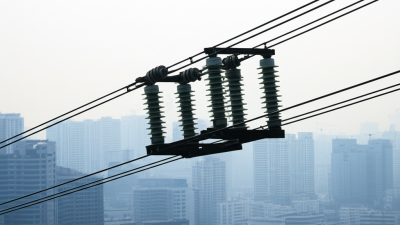
China’s 160B glass insulators are commonly used on overhead transmission lines and substation connections. In many procurement systems, “160B” indicates a cap-and-pin glass unit with approximately 160 kN mechanical strength. This designation is not universal. Buyers should verify the drawing, creepage distance, and test certificate.
Their main role is supporting conductors while controlling electrical leakage. Suspension strings carry conductors across straight towers. Strain strings resist higher tension near dead-end towers, river crossings, and sharp route changes.
Glass offers visible damage after flashover, which helps field crews identify failed units. The fit matters. IEC 60305 defines key characteristics for cap-and-pin glass and ceramic insulators above 1,000 volts.
Grid expansion is increasing demand. The International Energy Agency reported in Electricity Grids and Secure Energy Transitions 2023 that over 80 million kilometres of grids operate worldwide. It also estimates that an equivalent length must be added or refurbished by 2040. That pressure makes reliable sourcing important, especially for polluted, coastal, and high-altitude corridors. Field experience shows that salt deposits, dust, and poor washing schedules can reduce insulation performance. Price alone is a weak selection method. Suppliers should provide routine-test records, material traceability, and pollution-class recommendations. Some buying guides overlook installation hardware and transport breakage. That omission deserves reconsideration.
The price of a 160B glass insulator in China depends on more than factory cost. Raw materials, glass formulation, and energy consumption affect each production batch. Higher-grade glass usually supports better mechanical strength and thermal stability. It also costs more.
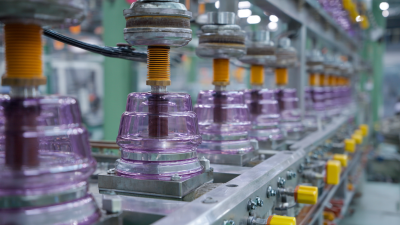
Tooling and production volume strongly influence quotations. A large order may reduce unit pricing, while small orders often carry setup costs. Custom fittings, cap design, surface finishing, and inspection requirements add further expense. Export packaging matters too. Wooden cases, moisture protection, and reinforced separators can prevent damage during long transport.
Testing is another key factor. Reliable suppliers should provide dimensional checks, mechanical load results, electrical performance data, and traceable inspection records. Ask whether testing occurs in-house or through an independent laboratory. That detail can change both price and confidence. I would not treat the lowest quotation as the best value. Some offers exclude packaging, testing, molds, or inland freight. Price comparisons are not always clean. Request a detailed specification sheet and a complete delivered-cost breakdown. One weakness remains: market prices can shift quickly when energy, currency, or shipping costs change. A written validity period is therefore useful, although it never removes every sourcing risk.
How to Select a Reliable Chinese 160B Glass Insulator Supplier
A reliable supplier should prove performance before discussing price. If “160B” means a 160 kN class glass disc insulator, request the exact drawing, creepage distance, coupling dimensions, and mechanical rating. Do not rely on a product photo. The International Energy Agency’s Electricity 2024 report expects global electricity demand to grow by about 3.2% annually from 2024 to 2026. Grid investment is rising, but quality pressure is rising too.
Ask for type-test reports based on IEC 60383-1, routine inspection records, and batch traceability. Check glass tempering, cement expansion control, galvanizing thickness, and hardware dimensions. A credible factory should provide sampling plans, laboratory records, and corrective-action reports. ISO 9001 certification helps, but it does not replace product testing. Request recent production evidence.
Review the quotation carefully. Confirm whether it includes packaging, export documents, testing, insurance, and delivery to your port. Compare the same specification, not only the unit price. A low offer may hide weaker fittings or incomplete testing. That mistake is expensive. Before placing a large order, inspect samples or arrange an independent factory audit. I would also test several pieces from one batch, because one perfect sample proves little. Suppliers sometimes describe “160B” differently, so written clarification is essential. Reliability is built from records, repeatability, and honest answers.
For a reliable 160B glass insulator supplier, evaluate technical compliance and quality documentation before comparing price. The suggested weighting gives the highest priority to mechanical and electrical test compliance, followed by total landed cost, production capacity, and delivery performance. Request quotations with the same quantity, Incoterm, packaging method, inspection requirements, and destination so that prices can be compared fairly.
: It usually indicates a specified mechanical failing load of 160 kilonewtons. Confirm this in writing.
They are commonly installed in high-voltage overhead transmission strings. The exact application depends on voltage and pollution conditions.
A common design has a 280-millimeter disc diameter and 146-millimeter nominal spacing. Verify the approved drawing.
It has a smooth surface and provides visible damage evidence. Broken glass usually falls away, simplifying ground-level inspection.
Request routine-test records, material details, dimensional reports, and batch traceability. Product photographs are not enough.
Glass formulation, order quantity, fittings, testing, packaging, energy costs, and delivery terms all affect pricing.
Yes. Testing, export packing, inland freight, or inspection fees may be excluded. Cheap may become expensive.
Check chipped edges, cement cracks, pin alignment, coating defects, and marking clarity. Photograph each pallet before loading.
Confirm mechanical load, coupling size, creepage distance, glass diameter, voltage class, and local requirements.
Use separators, moisture protection, reinforced cases, and loading records. Inspect again after arrival.
Not necessarily. Request dated warehouse photographs and batch documents before accepting the claim.
Catalogue dimensions may be copied incorrectly. No checklist removes every sourcing risk. Recheck the drawing.
The Glass Insulator 160b is a suspension insulator designed for dependable insulation and mechanical support in overhead power transmission and distribution systems. Its performance depends on key specifications such as rated voltage, mechanical strength, creepage distance, insulation level, glass quality, and resistance to weather, pollution, and temperature changes. Buyers should assess transparency, surface finish, cementing quality, dimensional accuracy, electrical test results, and consistency between production batches to confirm reliable long-term operation.
In China, Glass Insulator 160b prices are influenced by raw material costs, design requirements, order quantity, testing standards, packaging, and shipping conditions. Selecting a supplier should involve reviewing production capabilities, quality-control procedures, technical documentation, inspection records, and communication efficiency rather than focusing only on the lowest quotation. Before shipment, customers should confirm specifications, arrange sampling or third-party inspection when appropriate, and check packaging protection, marking, certificates, and delivery terms. Clear purchase agreements and careful acceptance procedures can help reduce quality risks and ensure smooth installation.