Leave Your Message
0%

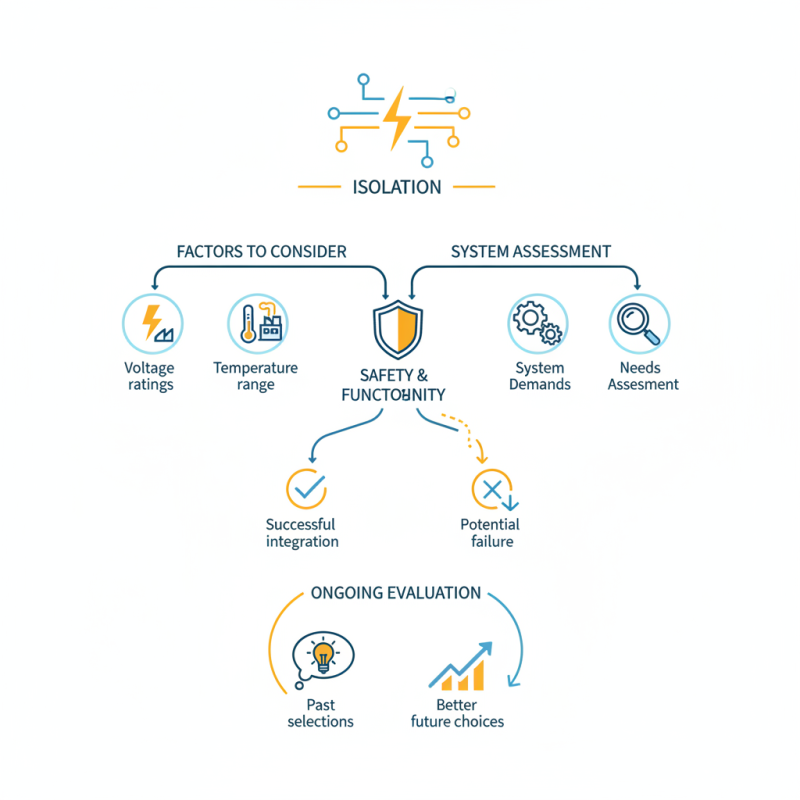
Picking out the right high-voltage isolator isn’t something you want to overlook — it’s pretty crucial for any electrical setup. These isolators are basically your safety net, helping to disconnect parts of the circuit when needed, which keeps everyone safe and things running smoothly. But honestly, choosing the right one can sometimes feel like navigating a maze — there's a lot to think about, and each option can really influence how well the system performs and how safe it is.

When you’re looking at different high-voltage isolators, make sure to check their voltage ratings and see if they can handle the environment they’ll be in. For example, will they be exposed to extreme temperatures or tough conditions? Picking the wrong one could lead to failures that cost a lot in the long run. So, it’s worth really considering where and how you’re planning to install them.

Doing a thorough assessment of what you actually need is super important. Understand your system’s demands and limitations — don’t just go with the popular brand without thinking it through. Companies like Schneider Electric have good reputations, but even their products aren’t perfect for every situation. That’s why it’s smart to keep evaluating your choices over time. Ultimately, this decision can make or break your entire operation, so reflecting on past experiences can help you make smarter choices down the line.

How to Choose Isolator High Voltage for Your System?

Understanding High Voltage Isolators and Their Importance

How to Choose Isolator High Voltage for Your System?

High Voltage Isolators are crucial for many systems. They serve to protect sensitive equipment from surges and faults. These devices ensure that electrical components operate safely and efficiently. Understanding their role can lead to better decision-making when integrating them into a system.

Choosing the right isolator involves assessing specific needs. Consider factors like voltage ratings, insulation type, and environmental conditions. High voltage environments can be unpredictable. The wrong choice may lead to equipment failure or safety hazards. Testing different isolators can show their varying effectiveness.

It’s also essential to think about maintenance. High voltage isolators require regular inspections. Overlooked issues can cause problems later. An isolator may perform well at first but degrade over time. Don’t ignore wear and tear. Continuous learning about isolators improves system reliability. Reflect on your experiences for better choices in the future.

Key Factors to Consider When Choosing High Voltage Isolators

When selecting high voltage isolators, several factors require careful consideration. The voltage rating is crucial; ensure it meets or exceeds your system's needs. Look at the isolation resistance as well. A higher resistance usually indicates better performance. Frequently, other technical specifications can get overlooked, leading to potential failures.

Temperature ratings also matter. Your isolator must operate effectively in your environment. Excessive heat can degrade performance, so check the specifications accordingly. Don't forget about physical size and mounting options. An isolator that doesn't fit will cause installation headaches.

Finally, consider your application. Different settings may demand unique features. Maybe you need quick response times or specific environmental protections. It’s vital to reflect on whether the chosen isolator aligns well with your system's needs. Decisions based on assumptions often lead to regret later.

Types of Isolators Used in High Voltage Applications

Isolators play a critical role in high voltage applications. They help maintain system integrity and protect equipment. Understanding the types of isolators available can guide you in making the right choice for your needs.

There are several common types of isolators. The first is the manual isolator. It requires human intervention to operate. This type is often found in smaller systems. Next, we have the motorized isolator. It provides remote operation, which can be convenient in larger setups. A motorized isolator may not always ensure safety, though. Human error in operation can lead to serious issues.

Another type is the vacuum isolator. This version is effective for high voltage applications. By using a vacuum, these isolators offer excellent performance and reliability. However, they can be complex and require precise maintenance. Lastly, there's the oil-insulated isolator. While it minimizes electrical arcing, it raises concerns about environmental impact and leakage. Each type has its pros and cons. Reflecting on your specific needs will help in choosing the right one.

Evaluating Electrical Performance Specifications

When choosing an isolator for high voltage systems, electrical performance specifications are crucial. Start by evaluating the voltage rating. It must exceed your system's maximum operating voltage. Consider operation under extreme conditions too. High temperatures can impact performance. Ensure the isolator can handle these conditions.

Insulation resistance is another key spec. This value indicates how well the isolator can prevent power loss. A higher resistance rating is typically better. Pay attention to the dielectric strength as well. This determines the isolator's ability to withstand high voltage without breaking down. It's essential to analyze real-world applications for validation.

Lastly, think about thermal performance. Incorrect thermal management can cause failures. Check the cooling requirements of your isolator. It should accommodate the heat generated during operation. Not all isolators perform equally in different environments. Be ready to adapt and reassess your choices. Each detail matters in ensuring reliability and safety in your system.

Assessing Environmental and Mechanical Durability

When selecting isolator high voltage equipment, understanding environmental and mechanical durability is crucial. Industry data shows that around 30% of failures in high voltage systems result from inadequate durability. Environmental factors, like humidity and temperature, can severely impact the lifespan of isolators. For instance, materials exposed to high humidity levels may corrode faster. It is vital to consider the local climate when making your choice.

Mechanical durability is equally important. Isolators must withstand physical stresses and loads. Studies indicate that equipment designed to endure vibrations can improve reliability by 15%. However, many engineers overlook this aspect, assuming all systems are equally robust. Incorporating standards with high mechanical ratings can significantly mitigate risks. Fatigue from mechanical stress can unexpectedly lead to failure.

In addition, routine maintenance practices are essential but often neglected. Inspections should assess wear and tear. This approach ensures that early signs of damage are addressed. However, many systems are monitored inadequately. Elevated costs can arise from prolonged neglect. Careful planning for both environmental and mechanical aspects leads to more reliable performance. The challenge lies in balancing durability and cost efficiency in the long run.

Safety Standards and Compliance for High Voltage Isolators

When choosing high voltage isolators, safety standards are paramount. These devices must comply with regulations such as IEC 60076 for transformers and IEC 60664 for insulation coordination. Ensuring compliance can prevent accidents and enhance system reliability. A significant report by the International Electrotechnical Commission indicates that non-compliance can lead to failures costing businesses millions.

A vital consideration is the isolator's voltage rating. According to industry standards, isolators must exceed the system’s operational voltage by a safety margin. This accounts for transients and surges. Failure to do this may result in catastrophic failures. Regular assessments of previous failures often show poor voltage rating choices.

Tips: Always review the material standards. The isolation materials should withstand extreme conditions. Check the moisture and temperature ratings. These environmental factors can affect performance over time.

Moreover, never overlook the installation process. Many incidents arise from improper setup. Engaging qualified professionals is crucial. They can ensure the isolator is correctly implemented, minimizing future risks. Monitoring compliance over time is essential as well. Periodic audits can help identify potential issues before they escalate.

Tips for Installation and Maintenance of High Voltage Isolators

When working with high voltage isolators, focusing on installation and maintenance is crucial. Proper installation ensures safety and longevity. Always check the manufacturer’s specifications. Use appropriate tools to avoid damage. Alignment should be precise for optimal performance.

Here are some useful tips for installation. Secure connections are vital. Loose wires can lead to malfunctions. Make sure to insulate joints properly. Check the surrounding environment. It should be free of obstructions. Avoid exposure to harsh weather conditions. An ideal setup promotes efficiency.

Maintenance is just as important. Regular inspections can prevent issues. Look for wear and tear. Dust and debris can accumulate. Keeping the isolator clean reduces the risk of failure. Always ensure that the isolator is de-energized during maintenance to prevent accidents. Reflect on the process to identify areas for improvement. Neglecting maintenance can lead to costly problems down the line.

How to Choose Isolator High Voltage for Your System?

Parameter Description Importance Recommended Value
Voltage Rating The maximum voltage the isolator can safely handle. Critical for safety and functionality. > 60 kV
Insulation Material Material providing electrical insulation, affecting durability. Affects reliability and longevity. Ceramic or composite materials
Temperature Range The operational temperature range for the isolator. Impact on performance in various environments. -40°C to +90°C
Installation Type How the isolator is mounted and connected in the system. Affects ease of installation and maintenance. Outdoor/Indoor mountable
Maintenance Schedule Recommended frequency for inspections and maintenance. Crucial for operational longevity and safety. Annually

FAQS

: What is the main purpose of this product?

: It aims to solve everyday problems. Users can benefit from its practical features.

How to use this product effectively?

Follow the instructions closely. Experiment with different settings for best results.

Are there any safety concerns?

Yes, always handle it carefully. Avoid using it near water or high heat.

What is the expected lifespan of the product?

It should last a few years with proper use. Wear and tear can happen, though.

How to clean and maintain it?

Use a damp cloth for cleaning. Avoid harsh chemicals that could damage the surface.

Can I return this product if I'm not satisfied?

Most places allow returns within a specified period. Keep the original packaging for easier returns.

What if I face issues while using it?

Seek help from user manuals. Online forums can provide additional advice and tips.

Is there any warranty available?

A limited warranty is provided. Check the details for specific coverage.

How can I contact customer support?

Look for contact information on the website. Email or call for prompt assistance.

Are there alternatives to this product?

Yes, various options exist. Research to find one that suits your needs better.

Conclusion

When selecting Isolator High Voltage for your system, it is crucial to understand their role and importance in ensuring safety and reliability. High voltage isolators serve as barriers that prevent unwanted electrical interaction, making their selection vital for any high voltage application. Key factors to consider include electrical performance specifications, environmental and mechanical durability, and adherence to safety standards.

Various types of isolators are available, each suited to specific high voltage uses, and it’s important to evaluate their capabilities carefully. Additionally, proper installation and maintenance practices can enhance the lifespan and effectiveness of these isolators. By addressing these considerations, you can ensure a secure and efficient high voltage system.
Evelyn

Evelyn

Evelyn is a dedicated marketing professional at Jiangxi QOCl Electric Co. Ltd., a company established in December 2002 in Jiangxi Province, China. With a deep understanding of the industry, Evelyn excels in promoting the company's advanced glass insulators and innovative circuit insulators. Her......
Previous Understanding Import Export Certifications for Isolateur Ctv 254 and How to Navigate the Process