Leave Your Message
0%

Okay, so a CTV Chain isolator is basically a mechanical switching device. Its job? To create a visible break in high-voltage equipment. The chain-operated setup lets technicians open or close that isolating path from a safer spot. Now, it’s not meant to interrupt fault current—that’s a key distinction. Circuit breakers handle faults. Isolators just give you physical separation once the circuit has been de-energized.

And dependable isolation is becoming a bigger deal. The International Energy Agency, in Electricity Grids and Secure Energy Transitions, said annual grid investment needs to climb above USD 600 billion by 2030. More substations and longer transmission routes mean safe, maintainable switching gear matters more than ever. IEC 62271-102 lays out requirements for HV AC disconnectors and earthing switches too—covering insulation, mechanical endurance, and operating performance.

John D. McDonald, an IEEE Fellow and well-known substation automation specialist, puts it this way: “Protection and control must work together as one coordinated system.” That idea applies directly to a CTV Chain Isolator. Its position indication, interlocking, and grounding arrangement all have to fit the wider substation design. A simple chain can hide some pretty complex engineering.

In operation, the chain transfers movement to the isolator mechanism. Contacts separate, insulation distance increases, and operators check that it’s actually open. Weather doesn’t help, either. Dust, ice, corrosion, and misalignment can all chip away at reliability.

A diagram looks clean. Field conditions? Not so much.

This article looks at the structure, operating sequence, safety role, maintenance needs, and practical limits of a CTV Chain Isolator. It also challenges a common assumption: visible separation alone doesn’t guarantee a safe work zone. Verification, isolation procedures, and proper earthing are still essential.
What Is a CTV Chain Isolator and How Does It Work?

What Is a CTV Chain Isolator?

A CTV chain isolator is a manually operated device that separates electrical equipment from its power source. The term CTV may describe a particular system or equipment series, so its exact meaning can vary between technical documents. In practical use, the isolator provides a clear and controlled disconnection point for inspection, maintenance, or emergency work.

It uses a chain, lever, or chain-linked handle to operate internal switching contacts. When pulled or moved, the mechanism opens the circuit and creates physical separation between conductive parts. Many units include a visible position indicator and a lockable handle. A padlock can prevent accidental reconnection while technicians work nearby.

The chain is not the protection itself. The isolator’s voltage, current, and fault ratings must match the installation. It may also be unsuitable for interrupting heavy loads unless the manufacturer specifically allows it. A qualified technician should switch off the upstream supply, isolate the circuit, and verify the absence of voltage with a tested instrument.

Small details matter. A stretched chain can reduce operating travel. Dust or corrosion may affect the mechanism. I have found that clear labeling is often overlooked, yet it prevents confusion during urgent maintenance. The device should be inspected regularly, although inspection intervals depend on the environment and applicable electrical standards.

The Main Components of a CTV Chain Isolator

A CTV chain isolator is a mechanical assembly that separates harsh chain loads from connected equipment. The term is not perfectly standardized. Always verify the vessel drawing and duty rating.

Its main components include the chain body, load pins, end links, isolator housing, elastomeric or metallic damping elements, and corrosion protection. The chain transfers tension through the end links. The isolator then absorbs part of the shock caused by wave motion, sudden braking, or uneven loading. A protective housing limits contamination. Inspection marks help crews identify wear, elongation, and damaged pins.

The detail matters offshore. The Global Wind Energy Council reported 75.2 GW of global offshore wind capacity by the end of 2023. More service vessels mean more repeated chain loading. The International Energy Agency has projected offshore wind capacity could increase about fifteenfold by 2040. That growth raises the value of simple, inspectable components.

A sound design balances flexibility and strength. Too much damping can create heat and excessive movement. Too little damping passes impact directly into the structure. Material choice also matters. Stainless fittings resist corrosion, while coated carbon steel can reduce cost but needs disciplined inspection. This is where practice becomes less tidy. Real loads rarely match laboratory assumptions. Engineers should compare calculated loads with inspection records, sea conditions, and manufacturer test data. A small crack is never “just cosmetic.”

What Is a CTV Chain Isolator and How Does It Work?

A CTV chain isolator is a flexible load-path assembly used to reduce the transmission of shock, vibration, and dynamic loads through a chain connection. The chain carries the working load, while the isolating element dissipates part of the motion between the connected structures.

The chart shows a theoretical normalized transmissibility response for a single-degree-of-freedom isolator with a 10 Hz natural frequency and 10% damping. Transmissibility above 1 indicates amplification near resonance; values below 1 indicate vibration reduction. The values are calculated from the standard vibration-isolation model and are not manufacturer performance data.

Main components: the load-bearing chain transfers tension, the isolator element provides compliance and damping, the tension or adjustment mechanism controls the working condition, and the end fittings maintain the mechanical load path between the chain and the connected structure.

How a CTV Chain Isolator Works Step by Step

What Is a CTV Chain Isolator and How Does It Work?

In offshore operations, a CTV chain isolator is a protective device fitted around a mooring chain. It separates moving steel links from a vessel’s guide, hawse pipe, or connection point. The isolator usually uses a tough elastomeric sleeve or shaped polymer blocks. Its purpose is practical: reduce impact, vibration, noise, and surface wear during station keeping. This matters as offshore wind expands. The Global Wind Energy Council reported about 75 GW of global offshore wind capacity by the end of 2023. More vessels mean more repeated mooring cycles.

How a CTV Chain Isolator Works Step by Step

The process begins when the chain carries vessel loads toward the anchor or seabed connection. The isolator receives contact pressure before the bare chain touches steelwork. Its flexible material spreads the load across a wider area. Small movements then become controlled sliding instead of sharp metal-on-metal impacts. During waves, the chain shifts, and the isolator compresses slightly. It absorbs part of the shock while preserving the chain’s working path. When the load falls, the material returns toward its original shape.

Not perfectly.

Technicians inspect cracks, missing sections, unusual flattening, and exposed chain links. DNV and ISO guidance stress documented inspection, load assessment, and corrosion control for offshore mooring equipment. A visual check alone can miss internal damage. That is an uncomfortable limitation. Water, grit, temperature, and poor alignment can shorten service life. Correct sizing, measured chain movement, and recorded inspection history therefore matter more than appearance.

Real equipment is less tidy.

How the Isolator Controls Electrical Isolation

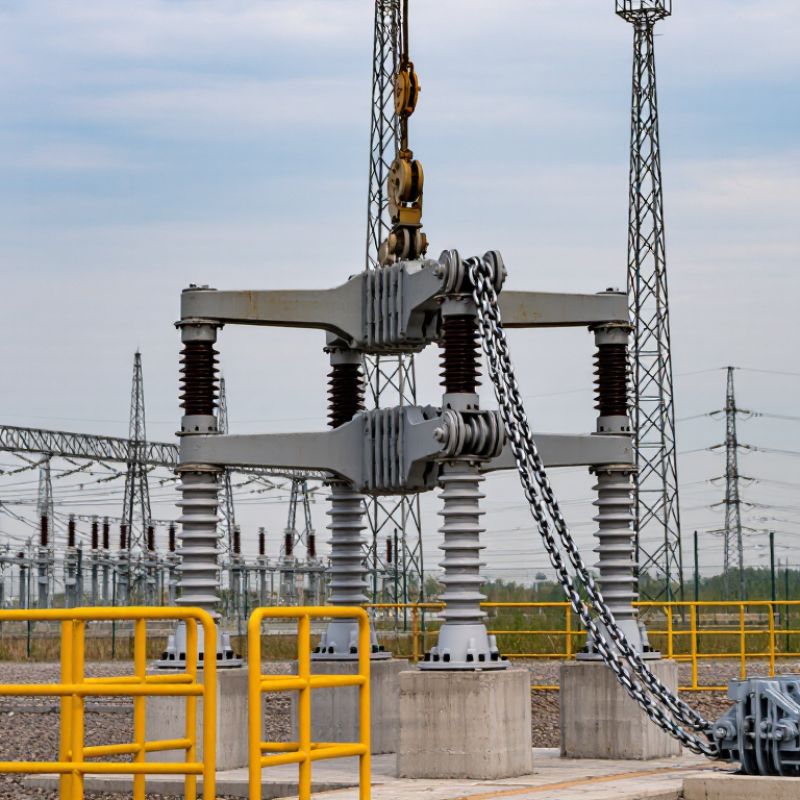
A CTV chain isolatoris a manually operated Disconnecting device used around current-transformer and voltage-transformer circuits. Its purpose is electrical isolation, not routine load interruption. When the operating chain is pulled, a linked mechanism separates fixed and moving contacts. The resulting air gap blocks the normal current path and gives technicians a visible isolation point.

The isolator should operate only after the circuit is de-energized. Interlocks, padlocks, and position indicators help prevent unsafe switching. In a substation, the sequence usually includes opening the isolator, confirming the contact position, testing for absent voltage, and applying an approved earth connection. IEC 62271-102 treats disconnectors as devices for isolation and specifies requirements for mechanical reliability and visible separation. Small details matter. A stretched chain can produce incomplete contact movement.

The International Energy Agency’s Electricity 2024 report expects global electricity demand to rise by about 6% between 2024 and 2026. That growth increases pressure on substations and their switching equipment. A dependable CTV isolator therefore supports maintenance, fault investigation, and controlled restoration. Field experience shows that labels, clear operating paths, and regular inspections often matter as much as the metalwork. The imperfect part is human judgment. A closed indicator can be trusted only when it matches testing and site conditions.

Common Applications of CTV Chain Isolators

What Is a CTV Chain Isolator and How Does It Work?

A CTV chain isolator is a mechanical switching device used to disconnect electrical equipment from its power source. A chain-operated handle moves the internal contacts between the connected and isolated positions. When open, the isolator creates a physical separation in the circuit. This helps technicians perform maintenance with greater confidence. It is not a substitute for a circuit breaker. It usually does not provide overload or short-circuit protection.

Common Applications of CTV Chain Isolators

CTV chain isolators are common near motors, pumps, fans, conveyors, and HVAC equipment. They allow workers to isolate one machine without shutting down an entire production line. On rooftop units, the chain can provide easier access from floor level. In dusty workshops, food-processing areas, and outdoor plants, suitable enclosures help protect the mechanism from moisture and debris. They also support lockout procedures during cleaning, inspection, and repairs. In practice, rushed inspections can create blind spots. A clear handle position does not always confirm safe isolation.

Tips: Check the voltage, current, enclosure rating, and pole configuration before installation. Mount the isolator where the chain remains reachable and cannot snag nearby equipment. Test the switching action during commissioning. Inspect terminals for heat marks, loose connections, and corrosion. Keep labels readable. A tidy installation can still need improvement. Always follow approved electrical procedures, site risk assessments, and the applicable local standards.

What Is a CTV Chain Isolator and How Does It Work? - Common Applications of CTV Chain Isolators

Data Dimension Technical Description Typical Design or Operating Data Common Applications
Product type A suspended vibration isolator that uses a flexible load-bearing chain, usually combined with a resilient spring or elastomeric element. The isolator is selected according to the supported load, required deflection, installation arrangement, and environmental conditions. Suspended mechanical, electrical, and building-service equipment.
Primary function Reduces the transmission of structure-borne vibration and mechanical noise from operating equipment to the supporting structure. Performance depends on isolator stiffness, equipment operating speed, supported mass, damping, and installation quality. HVAC systems, pumps, fans, air-handling equipment, and suspended pipework.
Load transfer The chain carries the suspended load while the resilient element permits controlled movement between the equipment and the structure. The working load should be distributed evenly among all isolators; uneven loading can reduce deflection and isolation performance. Equipment supported from threaded rods, structural channels, ceiling frames, or dedicated support steelwork.
Isolation principle The resilient support lowers the natural frequency of the equipment-support system, allowing vibration energy to be attenuated above the isolator’s operating range. Effective isolation normally requires the disturbing frequency to be sufficiently higher than the system natural frequency. Rotating equipment where motor, fan, or pump vibration could be transmitted into floors, ceilings, or building frames.
Movement capability The flexible chain arrangement allows limited vertical movement and can accommodate small alignment differences between support points. Movement must remain within the manufacturer’s allowable travel and must not cause chain kinking, contact, or overload. Suspended fans, duct-mounted equipment, pipe assemblies, and installations with limited access for rigid supports.
Common construction Typical assemblies include a corrosion-protected steel chain, connecting hardware, load plates or brackets, and a resilient spring or elastomeric component. Material and finish should be matched to indoor, humid, corrosive, or outdoor service conditions. Plant rooms, ceiling voids, commercial buildings, industrial facilities, and utility areas.
HVAC equipment Separates suspended air-moving equipment from the building structure to limit vibration and regenerated noise. Correct selection requires total operating weight, center of gravity, support-point spacing, fan speed, and required clearance. Air-handling units, fan-coil units, ventilation fans, exhaust fans, and duct-mounted equipment.
Pumps and rotating machinery Provides resilient support for equipment that generates periodic forces through rotation, imbalance, or reciprocating motion. The operating speed should be assessed against the isolator-system natural frequency to avoid resonance during start-up or shutdown. Water pumps, circulating pumps, small compressors, and other suspended rotating units.
Pipe and duct services Can be used to reduce the direct transfer of vibration through suspended pipework and ductwork when the support system is designed as a complete assembly. Service loads must include the weight of the pipe or duct, contents, insulation, valves, fittings, and any thermal movement. Chilled-water lines, heating-water lines, ventilation ducts, and equipment connections.
Noise-control contribution By limiting structure-borne vibration, the isolator can reduce secondary noise radiated by ceilings, floors, walls, and service supports. It does not replace acoustic enclosures, flexible connectors, duct treatment, or good equipment balancing where those measures are required. Offices, hospitals, hotels, studios, residential buildings, and other noise-sensitive spaces.
Installation requirements The support structure, attachment hardware, chain orientation, resilient element, and equipment frame must form a compatible load path. Use level support points, secure fasteners, adequate working clearance, and flexible connections where movement could be transferred into rigid services. New construction, plant-room upgrades, suspended equipment replacement, and vibration-control retrofits.
Selection criteria Selection is based on load capacity, required static deflection, dynamic behavior, chain length, mounting geometry, environment, and safety requirements. Never select only by nominal equipment weight; calculate the load at each support point and consider operating, starting, and transient forces. All applications where a suspended vibration isolator is being specified or replaced.
Maintenance and inspection Periodic inspection identifies corrosion, deformation, loose hardware, uneven loading, damaged resilient elements, and changes in equipment alignment. Inspection intervals should reflect vibration severity, operating environment, equipment criticality, and applicable safety procedures. Industrial facilities, commercial HVAC systems, public buildings, and critical mechanical installations.

Note: Performance values and allowable loads vary by isolator configuration, support geometry, equipment operating conditions, and installation requirements. Final selection should be verified against the applicable technical specification and structural safety requirements.

Key Benefits and Limitations of CTV Chain Isolators

What Is a CTV Chain Isolator and How Does It Work?

A CTV chain isolator is a protective isolation device used in a connected electrical or control chain. It separates a circuit section from its power source during inspection, adjustment, or fault finding. Its operating principle is straightforward: internal contacts open a defined electrical gap, while insulated housing limits accidental contact and surface leakage. In practical installations, technicians may verify isolation with an approved tester, apply the required lockout method, and check that no stored energy remains. The exact design depends on voltage, current, mounting conditions, and the surrounding equipment.

Key Benefits and Limitations of CTV Chain Isolators

The main benefit is safer maintenance. A visible isolation point can reduce confusion when several circuits share one enclosure. These devices may also improve fault control, simplify sectional testing, and protect sensitive components from unwanted energisation. Their compact form can help in crowded panels. Still, the isolator does not remove every hazard. It may not interrupt high fault currents unless specifically rated for that duty. Poor contact pressure, moisture, dust, or incorrect cable sizing can create heat and unreliable operation. Small details matter.

Installation quality decides much of the result. A loose terminal can undermine an otherwise suitable isolator. Routine inspection should include enclosure damage, discoloration, mechanical wear, and insulation condition. The device must match the system’s electrical rating and environmental demands. One weakness remains easy to overlook: users may trust the handle position without testing the circuit. That assumption is unsafe.

U210 High Voltage Cap and Pin Glass Insulator: Anti-Fog Performance and Double-Shed Protection

The U210 high-voltage cap-and-pin glass insulator is designed for reliable suspension and insulation on demanding overhead transmission lines. With a rated mechanical load of up to 210 kN and an IEC-standard configuration, it combines toughened glass, a galvanized metal cap, and a secure pin connection to support stable operation under mechanical and electrical stress. Its transparent glass body also makes surface conditions and possible damage easier to identify during inspection.

A key feature is its anti-fog performance. The carefully formed glass surface helps reduce the accumulation and retention of moisture, dust, and conductive contamination, supporting dependable insulation in humid, coastal, industrial, and fog-prone environments. The double-shed, two-winged profile creates extended creepage distance and improves water-shedding behavior, helping limit leakage current when the insulator is wet or polluted.

The U210 double-shed design is suitable for high-voltage lines that require enhanced environmental resistance and long-term structural stability. Its balanced geometry provides effective protection against flashover risks while maintaining practical compatibility with suspension string assemblies. Toughened glass construction, standardized fittings, and a robust cap-and-pin structure make it a practical choice for transmission networks where anti-fog performance and double-shed protection are essential.

FAQS

What is a CTV chain isolator?

The term can describe two different devices. In electrical systems, it separates equipment from its power source. In offshore work, it protects a mooring chain from steel contact.

How does an electrical CTV chain isolator work?

A chain or lever moves internal switching contacts. The contacts open and create visible physical separation between conductive parts. A lockable handle can prevent accidental reconnection. Simple movement. Serious responsibility.

Is an electrical isolator the same as a circuit breaker?

No. An isolator mainly provides disconnection. It usually does not protect against overloads or short circuits. Upstream protection remains necessary.

How should technicians use an electrical chain isolator safely?

Switch off the upstream supply before operating the isolator. Lock the handle, attach a warning label, and verify zero voltage with a tested instrument. A visible handle position alone is not enough.

Where are electrical chain isolators commonly installed?

They are used near motors, pumps, fans, conveyors, and HVAC equipment. A rooftop unit may use a reachable chain from floor level. Suitable enclosures help resist dust, moisture, and debris.

What should be checked before installing an electrical chain isolator?

Confirm the voltage, current, enclosure rating, and pole configuration. Check that the chain cannot snag nearby equipment. Test the switching action during commissioning. Labels should remain readable.

How does an offshore mooring-chain isolator work?

It fits around a moving mooring chain. Its elastomeric sleeve or polymer blocks reduce impact, vibration, noise, and surface wear. The material spreads contact pressure before bare steel reaches nearby structures.

What problems can affect an offshore chain isolator?

Inspect for cracks, missing sections, unusual flattening, and exposed chain links. Water, grit, heat, and poor alignment can shorten service life. Visual checks may miss internal damage. That limitation matters.

How often should a CTV chain isolator be inspected?

Inspection intervals depend on the equipment, environment, and applicable standards. Keep records of chain movement, corrosion, damage, and repairs. Appearance can mislead. A tidy device may still need replacement.

Conclusion

A Ctv Chain Isolator is a specialized switching device designed to separate an electrical circuit safely and visibly during inspection, maintenance, or emergency shutdown. It typically includes a robust enclosure, electrical contacts, insulating materials, a manual operating mechanism, and a chain or lockable handle that helps prevent accidental operation. By moving the mechanism to the isolation position, the device opens the circuit and creates a clear physical separation between the power source and connected equipment.

The Ctv Chain Isolator works step by step: an operator activates the handle or chain, the internal contacts separate, and the isolated circuit can be secured against unintended reconnection. Its insulating structure helps control electrical separation and reduces the risk of unwanted current flow. Common applications include machinery, industrial control panels, electrical distribution equipment, and outdoor installations. Key benefits include straightforward operation, visible isolation, improved maintenance safety, and compatibility with lockout procedures. However, correct sizing, installation, environmental protection, and regular inspection are essential because an isolator is not intended to replace every type of protective or fault-clearing device.

Amelia

Amelia

Amelia is a highly skilled marketing professional at Jiangxi QOCI Electric Co. Ltd., a leading manufacturer of glass insulators established in December 2002 in Jiangxi Province, China. With a profound understanding of the company’s products and an unwavering commitment to excellence, she plays a......
Previous Why Choose Anti Fog Glass Insulators for Global Sourcing?