Leave Your Message
0%

A high voltage isolator is a mechanical switching device used to separate electrical equipment from an energized system. It creates a visible air gap, helping technicians confirm that a circuit is physically disconnected. In substations, you may see long metal blades opening beside busbars, transformers, or transmission lines. The device does not normally interrupt heavy fault current. A circuit breaker must clear the load or fault first.

The phrase Isolator High Voltage describes equipment designed for high-voltage isolation duties. Its operation may be manual, motorized, or remotely controlled. When opened, its contacts move apart and establish a safe clearance. Some designs include an earthing switch, which connects the isolated section to ground after testing confirms de-energization. Mechanical and electrical interlocks can prevent unsafe sequences, although their protection depends on correct installation and maintenance. Small details matter.

Standards such as IEC 62271-102 provide important guidance for disconnectors and earthing switches. However, actual performance depends on rated voltage, current, insulation level, weather, pollution, and installation height. Experienced engineers review drawings, switching procedures, manufacturer instructions, and inspection records before operation. They also check contact alignment, corrosion, lubrication, and position indicators. A visible gap is useful, but it is not proof of zero energy. That assumption can be dangerous. This article explains how isolators work, where they belong in a protection system, and why disciplined verification remains essential. Some designs appear simple. Their safety depends on many connected decisions.
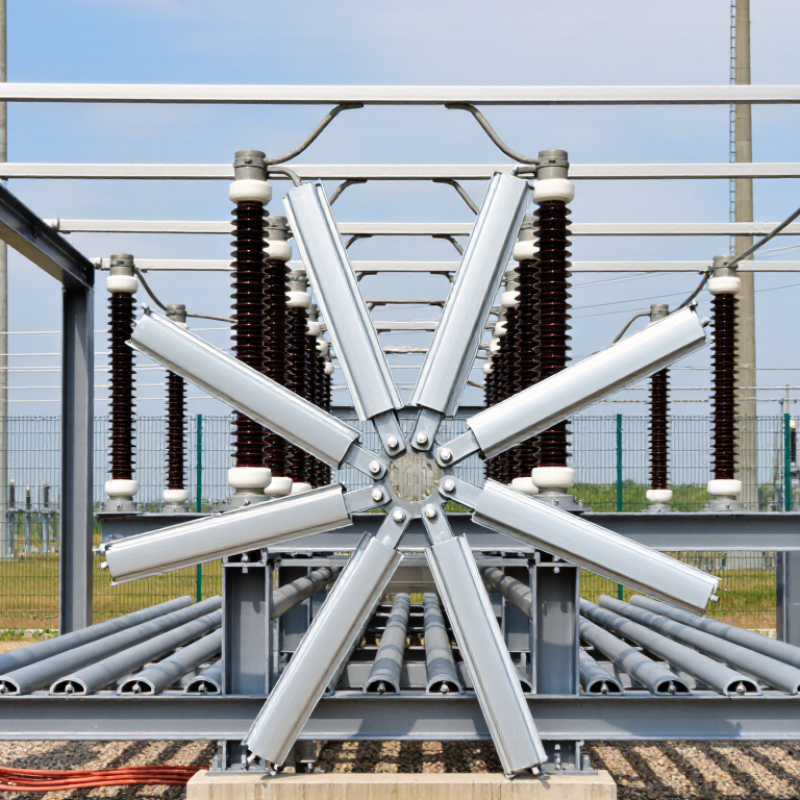
What Is a High Voltage Isolator and How Does It Work?

Definition and Purpose of a High Voltage Isolator

A high voltage isolator is a mechanical switching device used to separate an electrical circuit from its power source. In common IEC practice, high voltage generally means above 1,000 volts AC or 1,500 volts DC. Unlike a circuit breaker, an isolator is not designed to interrupt heavy fault current. It creates a visible or clearly indicated gap, allowing technicians to confirm that equipment is electrically disconnected before maintenance.

Its purpose is safety, not routine load control. After a circuit breaker stops current, the isolator opens through moving contacts, often with a visible blade and an interlocking mechanism. Earthing switches may then connect the isolated section to ground. This helps remove trapped or induced voltage, although every installation still requires testing. The word “isolated” can sound absolute. It is not.

IEC 62271-102 addresses high voltage disconnectors and earthing switches, including insulation, mechanical endurance, and operating performance. These details matter outdoors, where ice, dust, wind, and corrosion can affect contact pressure. The IEA Electricity 2024 report projects global electricity demand to grow by an average 3.3% annually from 2024 to 2026. More network capacity increases the need for dependable isolation points. Yet a report cannot replace field judgment. A clear diagram may still hide an overlooked backfeed, induced voltage, or faulty interlock. Safe operation depends on design verification, visible position confirmation, and disciplined switching procedures.

Main Components and Structural Design

A high voltage isolator creates a visible separation between energized conductors and maintenance zones. It normally operates after the circuit breaker has interrupted load current. The isolator itself is not designed to extinguish a power arc. Its purpose is unmistakable isolation.

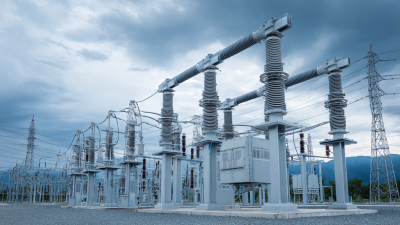
The main assembly includes fixed contacts, moving blades, porcelain or composite Insulators, a metal frame, and an operating mechanism. The blade travels through a controlled angle, often using a motor or manual linkage. Auxiliary contacts indicate its position remotely. Earthing switches may discharge trapped energy and connect isolated sections to ground. Mechanical and electrical interlocks help prevent unsafe switching sequences.Small details matter. Misalignment can increase contact resistance, heating, and wear.

Structural design must balance electrical clearance, mechanical strength, and environmental exposure. Engineers check creepage distance for dust, salt, and moisture. They also assess wind loads, short-circuit forces, seismic movement, and altitude correction. IRENA’s Renewable Capacity Statistics 2024 recorded 473 GW of new renewable capacity in 2023. That expansion increases the need for reliable substations and switching points. The IEA Electricity 2024 report expects global electricity demand to grow by about 3.3% annually from 2024 to 2026. More switching equipment will follow. Yet capacity growth does not guarantee good design. Field inspections still find loose fasteners, uneven blade contact, and poorly protected drive cabinets. Drawings can look perfect. Real sites are less tidy. Engineers should verify temperature rise, insulation performance, and operation after installation, not only trust factory records.

How a High Voltage Isolator Operates

What Is a High Voltage Isolator and How Does It Work?

A high voltage isolator creates a clear physical separation in an electrical circuit. It is normally used after a circuit breaker interrupts the load current. The isolator then opens its contacts, producing a visible air gap between energized and isolated conductors. That gap gives maintenance teams direct confirmation that the circuit is disconnected. Most isolators are not designed to interrupt heavy fault current. Opening one under load can create a dangerous arc and damage the equipment.

How a High Voltage Isolator Operates

A typical operating sequence begins with the circuit breaker opening. The isolator can then move through a motor-driven or manual mechanism. Its contacts travel slowly and deliberately, reducing mechanical shock and contact wear. Interlocking systems usually prevent operation at the wrong time. After voltage is verified as absent, an earthing switch may close on the isolated side. This connects trapped or induced energy to ground.

Small details matter.

Operators check position indicators, mechanical locks, and local control panels before approaching the equipment. Inspection also includes contact alignment, insulation condition, corrosion, and operating torque. In outdoor yards, rain, dust, ice, and temperature changes can affect movement. A position indicator can also mislead if its linkage is damaged, so visual confirmation remains valuable. Maintenance records should include contact resistance and insulation-test results. Procedures vary between installations, and assuming every isolator works identically is an avoidable mistake.

Key Differences from Circuit Breakers and Disconnectors

A high voltage isolator is a mechanical switching device used to separate electrical equipment from an energized network. Its open position creates a clear isolation gap, often visible from the operating area. This gap helps maintenance teams confirm that a transformer, busbar, or cable section is physically disconnected. The device normally operates only after the circuit current has been interrupted.

A circuit breaker performs a different and more demanding job. It can open during normal load conditions and interrupt short-circuit current. Inside, an arc-control system extinguishes the arc produced when contacts separate. Protection relays may command this operation within milliseconds. An isolator does not usually have the same arc-interruption capability, so opening it under load can cause severe damage. That distinction is critical.

The term disconnector often means the same thing as isolator, depending on regional standards and site practice. In some projects, “disconnector” describes the switching function, while “isolator” emphasizes safe maintenance isolation. Neither term should be judged by its label alone. Engineers check rated voltage, current, insulation level, mechanical endurance, and interlocking arrangements. A typical sequence uses the circuit breaker first, then the isolator, followed by voltage verification and grounding. The sequence sounds simple. Field conditions are not always simple. Misread indicators, stored energy, or poor coordination can create dangerous assumptions. Experienced crews rely on tested procedures, independent checks, and clearly visible position indications.

Common Types and Their Applications

A high-voltage isolator is a mechanical switch that creates a visible separation in an electrical circuit. It normally operates after current has been interrupted by a circuit breaker. Its open position helps technicians confirm that equipment is physically disconnected before maintenance begins. It is not usually designed to break heavy fault current. That distinction matters.

Common types include single-break, double-break, center-break, and pantograph isolators. A single-break design uses one moving contact and suits compact substations. Double-break models open the circuit at two points, improving isolation distance. Center-break units move contacts apart from the middle and often serve outdoor switchyards. Pantograph isolators connect overhead conductors to busbars, making them useful where vertical clearance is limited. Earthing switches provide another layer of protection by connecting isolated conductors to ground. They must only close after safe isolation is confirmed.

Applications vary with voltage level, layout, and maintenance practice. Substations use isolators around transformers, busbars, and incoming feeders. Transmission lines use them to separate sections during inspection or repair. Industrial plants may install them near large motors and high-voltage distribution panels. Operators check position indicators, interlocks, contact alignment, and insulation condition. A visible gap alone is not enough. Dust, ice, mechanical wear, or a misleading indicator can create risk. The distinction is easy to miss. Site procedures, tested equipment, and qualified personnel remain essential because real installations rarely behave perfectly.

Safety Principles and Operating Requirements

A high-voltage isolator creates a visible electrical separation between energized equipment and a work area. It is not a switch for interrupting heavy fault current. Operators normally use it after the circuit breaker has opened. The isolator then remains locked in position, helping workers verify that no unexpected connection exists.

Safety depends on a controlled sequence. Confirm the equipment identity, check the switching diagram, and obtain authorization before operation. Test for dead voltage with approved equipment. Apply portable earths where the procedure requires them. Keep approach distances within the values specified by local rules and IEC 62271-102. Interlocks should prevent unsafe actions, but they are not a substitute for human verification. It is not fail-safe by itself.

The U.S. Bureau of Labor Statistics recorded 145 fatal occupational injuries involving exposure to electricity in 2022. This figure includes different work environments, yet it shows why isolation discipline matters. In operating rooms, engineers inspect contact alignment, insulator condition, enclosure locks, and earthing points. Dust, moisture, and mechanical wear can weaken reliability. A small inspection gap may hide a serious defect.

CIGRE technical guidance also emphasizes documented switching procedures, competency assessment, and maintenance records for high-voltage installations. Paperwork can feel excessive during routine work. That assumption deserves challenge. A clear switching log may reveal an incorrect feeder label before energy reaches the worksite. Conditions change, and even experienced teams can miss one detail. Safety improves when every step remains observable, independently checked, and technically justified.

420kN U420BP Anti-Fog Toughened Glass Suspension Insulator: Design, Performance, and Applications

The 420kN U420BP anti-fog toughened glass suspension insulator is designed for high-voltage transmission lines that require strong mechanical performance and dependable insulation under severe environmental conditions. Its toughened glass disc structure provides high tensile strength, stable dielectric behavior, and visible damage identification: when a disc fails, the glass is designed to shatter, making inspection more efficient. The anti-pollution profile is particularly suitable for coastal, industrial, desert, and fog-prone corridors where salt, dust, and moisture can create conductive surface layers.

Performance evaluation should follow applicable IEC requirements, including mechanical, electrical, thermal-shock, and pollution-testing procedures referenced in IEC 60383-1. A rated mechanical load of 420kN supports demanding conductor configurations and helps improve safety margins against wind, ice, and dynamic loading. CIGRE technical guidance emphasizes that pollution flashover risk depends on contamination severity, wetting conditions, and leakage-current control, so string length and creepage distance should be selected according to site data rather than voltage alone.

The product also aligns with the expansion and reinforcement needs highlighted in the International Energy Agency’s *Electricity Grids and Secure Energy Transitions* report, which estimates that more than 80 million kilometers of grids may need to be added or refurbished worldwide by 2040. For utilities and EPC contractors, this glass suspension insulator can serve as a practical option for new lines, uprating projects, and replacement programs where mechanical capacity, pollution resistance, and long-term inspection efficiency are essential.

FAQS

What is a high voltage isolator?

It is a mechanical device that separates electrical equipment from its power source. High voltage commonly means above 1,000 volts AC or 1,500 volts DC. Its open position creates a visible or clearly indicated gap. The gap supports safer maintenance work. It is not absolute.

What is the main purpose of an isolator?

Its purpose is electrical isolation, not routine load control. Technicians use it to separate transformers, cables, or busbars from an energized network. The visible gap helps confirm physical disconnection. A circuit breaker normally interrupts current before the isolator opens.

Can an isolator interrupt short-circuit current?

Usually, no. A circuit breaker is designed to interrupt load current and fault current. An isolator generally lacks equivalent arc-control equipment. Opening it under load can create a dangerous arc. It may damage contacts and surrounding insulation.

How does a typical isolator operate?

The circuit breaker opens before the isolator moves. A manual or motor-driven mechanism then separates the contacts slowly. Operators check the position indicator and mechanical locks. An earthing switch may connect the isolated section to ground. The sequence sounds simple. Field conditions are not.

Why is an earthing switch used?

An earthing switch helps discharge trapped or induced voltage. It connects the isolated section to ground after voltage absence is verified. This reduces electrical risk during maintenance. Grounding does not replace testing. Every installation still needs site-specific checks.

How is an isolator different from a circuit breaker?

An isolator creates physical separation for maintenance. A circuit breaker controls current and interrupts faults. Protection equipment can command a breaker within milliseconds. An isolator normally operates after current stops. Confusing these functions can produce serious mistakes.

What should operators inspect before using an isolator?

They should check contact alignment, insulation, corrosion, locks, and position indicators. Outdoor equipment may collect dust, ice, or moisture. Temperature changes can affect movement and contact pressure. Maintenance records should include contact resistance and insulation-test results. Small details matter.

Can a position indicator be trusted completely?

No. A damaged linkage can show an incorrect position. Operators should compare the indicator with available visual evidence and control-panel information. They should also follow approved switching procedures and independent checks. The label can mislead.

What safety issues can remain after isolation?

Backfeed, induced voltage, stored energy, and faulty interlocks may still exist. A clear diagram can hide an unexpected supply path. Operators must verify voltage absence before grounding or maintenance. “Disconnected” should not mean “assumed safe.” Reflection is still necessary.

Conclusion

An Isolator High Voltage is a mechanical switching device designed to safely separate high-voltage equipment from the electrical system during maintenance, inspection, or emergencies. It provides a visible isolation point but is generally not intended to interrupt heavy fault currents. Its main components include fixed and moving contacts, insulating supports, an operating mechanism, a frame, and, in some designs, a grounding switch. The structure may be indoor or outdoor, with variations such as single-break, double-break, center-break, pantograph, and earthing types for different voltage levels and installation conditions.

During operation, the contacts move apart to create a clearly visible gap, preventing electrical energy from reaching the isolated section. Unlike a circuit breaker, an isolator normally operates only after the current has been interrupted, while a disconnector emphasizes safe physical separation rather than fault protection. Common applications include substations, transmission lines, transformers, and industrial power systems. Safe operation requires proper switching sequences, electrical interlocks, grounding, inspection, suitable personal protective equipment, and confirmation that the circuit is de-energized before work begins.
Evelyn

Evelyn

Evelyn is a dedicated marketing professional at Jiangxi QOCl Electric Co. Ltd., a company established in December 2002 in Jiangxi Province, China. With a deep understanding of the industry, Evelyn excels in promoting the company's advanced glass insulators and innovative circuit insulators. Her......
Previous 7 Tips for Choosing a CTV Chain Isolator?