Leave Your Message
0%

When you're on the hunt for green glass electrical insulators, don’t just settle for comparing colors, prices, or flipping through catalog photos. You really need to look beyond that. The glass should have a consistent translucent look, be well-formed without any imperfections, and show a reliable surface finish or glaze. Little bubbles in the glass? Sometimes that’s okay, depending on what you’re after. But cracks, sharp edges, or deep striae—they’re no-go zones. Honestly, how it performs matters way more than just how it looks.

Dr. Elena Maric, who’s an expert in electrical insulation, put it pretty simply: “A Green Insulator’s value comes from its color supporting traceability. It’s not an excuse to hide inconsistencies.” That idea should really guide your conversations with suppliers. Don’t just ask about the price or look at generic samples—make sure to request test results for dielectric strength, mechanical load capacity, thermal shock, and UV aging. Try to get actual samples from the line that will produce your insulators, not just the promotional ones.

Pay close attention to the details. Reliable manufacturers should be transparent about where they get their raw glass, how they mold the insulators, firing temperatures, inspection methods, and batch numbering systems. Big names like Siemens Energy, Hitachi, and Hubbell Power do a good job providing technical info, but don’t forget—these documents are helpful, but it’s always best to do your own review to make sure the product fits your needs. Reputation alone isn’t enough.

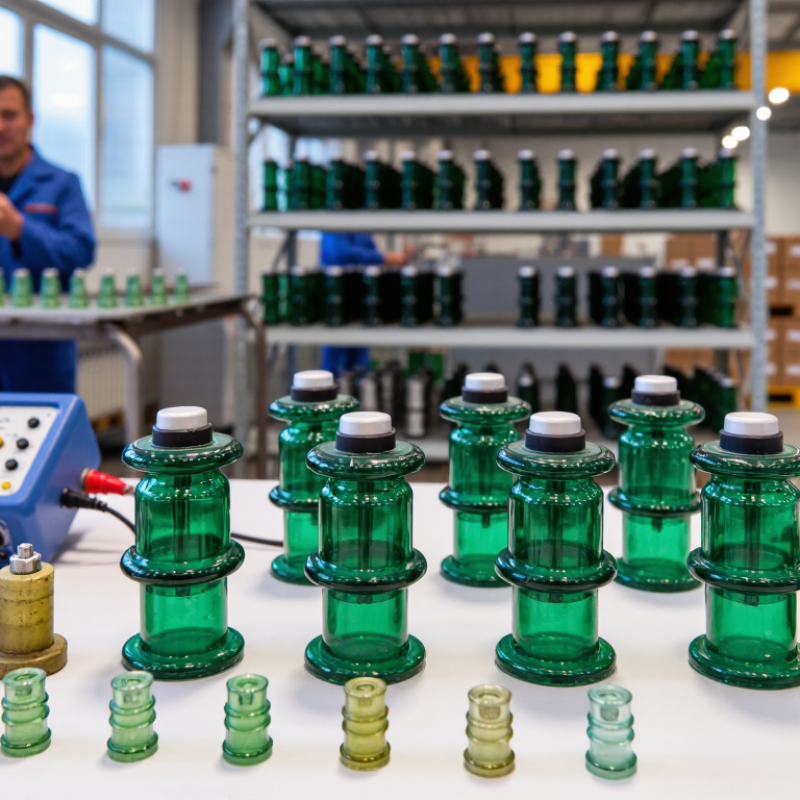
If you can swing it, visit the factory. Watching the workers inspecting for pinholes, chips, warping, or uneven surfaces gives you a real sense of the process. A clean, well-organized warehouse also matters—things like moisture, careless stacking, or mixed batches can really mess up what looks like a good product.

And don't forget to double-check compatibility. Confirm the right dimensions, creepage distances, hardware fitting, voltage rating, and whether it can handle your environmental conditions. Coastal air, industrial dust, freezing cold—these factors can all influence what kind of insulator you actually need.

Just keep in mind—no process is perfect. Test reports can sometimes be incomplete, and the shade of green can change between batches. That’s why having a written spec, keeping samples, and setting clear acceptance criteria are so important. When you source with care, green glass insulators go from just a visual choice to a trusted, reliable part of your grid.

— (Feel free to add your own touch here!)
How to Source Green Glass Electrical Insulators?

Define Voltage, Mechanical Load, and IEC 60383-1 Requirements

How to Source Green Glass Electrical Insulators?

Define Voltage, Mechanical Load, and IEC 60383-1 Requirements

Start with the electrical system, not the glass color. Define the highest operating voltage, insulation level, pollution severity, altitude, and creepage distance. For a 132 kV line, the required insulation string may differ significantly from a 33 kV design. Switching and lightning impulses also affect the specification. A recurring procurement mistake is selecting by voltage alone. It is incomplete.

IEC 60383-1 covers characteristics and tests for insulator units and strings used on overhead lines above 1 kV. Request documented power-frequency, impulse, and mechanical test results. Check the specified failing load, not only the routine inspection value. Mechanical design should consider conductor tension, wind, ice, angle loads, and installation impact. A neat spreadsheet can still be wrong.

Use green-tinted toughened glass only when its performance records are clear. Ask for batch traceability, dimensional drawings, visual inspection criteria, and evidence of thermal and mechanical consistency. The International Energy Agency reported in Electricity Grids and Secure Energy Transitions that annual grid investment must rise from about 300 billion dollars to over 600 billion dollars by 2030. That expansion increases pressure on reliable sourcing, but speed should not replace verification. IEC 60383-1 is essential, yet project specifications may require additional utility or environmental tests. Review the gaps carefully. One overlooked load case can invalidate an otherwise compliant selection.

Specify Toughened Glass, Cap-and-Pin, and Hardware Requirements

How to Source Green Glass Electrical Insulators?

Specify Toughened Glass, Cap-and-Pin, and Hardware Requirements

“Green glass” needs a precise definition. Its color often comes from iron content, not environmental performance. Request the glass composition, recycled-content statement, and environmental product documentation. The IEA’s Electricity Grids and Secure Energy Transitions report estimates that 80 million kilometers of grids must be added or refurbished by 2040. Procurement quality will matter more as replacement demand accelerates.

Specify toughened glass with IEC 60383-1 compliance, not simply “high-strength glass.” State the rated mechanical load, puncture resistance, thermal-shock performance, and power-frequency test levels. Require documented residual-stress testing and controlled fragmentation. A batch traceability code should link each disc to furnace conditions and inspection records. Small gaps here create large maintenance risks.

Cap-and-pin assemblies need equal attention. Define cap material, pin diameter, galvanizing thickness, cotter-pin design, and locking method. Include creepage distance, arcing distance, corona-ring provisions, and compatibility with the conductor hardware. Ask for salt-fog, pollution, impulse, and wet-power-frequency test evidence for the intended climate. IEA data also shows annual grid investment may exceed 600 billion dollars by 2030, so cheap hardware can become an expensive weakness.

Field packing deserves a written requirement. Glass may survive electrical stress but fail through chipped edges or careless handling. I would reject vague corrosion claims. Require dimensional inspection, coating records, sampling plans, and independent test certificates. Specifications are rarely perfect. Review them after the first delivery.

Match Insulator Disc Counts to the 10–12 kV Unit Rating

When sourcing green glass electrical insulators, match disc counts to the complete 10–12 kV unit rating, not voltage alone. For clean, low-altitude networks, one suspension disc may meet a 10 kV class application. A two-disc string is often more suitable for 12 kV systems, coastal air, industrial dust, or frequent rainfall. Confirm the manufacturer’s rated withstand voltage, creepage distance, and mechanical load before ordering.

IEC 60815-1 requires pollution severity and site conditions to influence insulation selection. Its approach supports a practical rule: harsher environments need longer creepage paths, not simply more discs. The 2024 IEA Electricity report projects global electricity demand to grow by about 3.4% annually through 2026. That growth increases pressure on distribution upgrades and makes consistent sourcing important. Ask suppliers for type-test reports covering dry and wet power-frequency withstand, impulse withstand, and thermal performance.

Green glass can reveal cracks, chips, and internal flaws during visual inspection. That helps field crews reject questionable units quickly. Still, color is not proof of electrical quality. I would not approve a purchase from disc count alone; this shortcut can fail near salt spray or heavy contamination. Request batch traceability, dimensional drawings, and test certificates aligned with IEC 60305 or the purchaser’s applicable utility standard. Store samples under cover, because rough handling can create damage that appears only after installation.

Screen Suppliers for ISO 9001 and Verified Type-Test Records

How to Source Green Glass Electrical Insulators?

Screen Suppliers for ISO 9001 and Verified Type-Test Records

Sourcing green glass electrical insulators requires more than comparing unit prices. Start by requesting a current ISO 9001 certificate and checking its certification scope. The scope should cover the design, production, and inspection of electrical insulators. Confirm the certificate number, validity period, issuing body, and registered manufacturing address. A certificate alone is not proof of consistent product quality.

Ask suppliers for complete type-test records, not selected pages. Each report should identify the insulator model, rated voltage, test standard, laboratory, test date, and sample details. Check whether an independent, competent laboratory performed the tests. Compare the report data with your required design. Small differences in dimensions or fittings can invalidate an otherwise impressive record. Request evidence that the tested sample matches current production drawings.

A practical supplier review should include factory photos, inspection procedures, and batch traceability. Look for glass surface defects, chipped edges, uneven skirts, and damaged wooden crates. Ask how routine tests are recorded before shipment. During a factory audit, sample several batch codes and follow them back to raw materials and test results. This takes time. It also reveals weak recordkeeping. I have found that clean paperwork can still hide unclear sample identification. That deserves a second review. Require corrective-action records when suppliers miss inspection points, and keep approval conditional until repeated batches show stable quality.

Check Routine Tests, 40–300 kN Loads, and Fragmentation Safety

How to Source Green Glass Electrical Insulators?

When sourcing green glass electrical insulators, ask for routine test records for every production batch. These records should identify the lot, test date, equipment, operator, and measured result. Visual checks should detect cracks, chips, bubbles, stains, and uneven surfaces. Dimensional checks also matter. Small deviations can affect assembly and string alignment.

Confirm the specified mechanical load before comparing suppliers. Common ratings range from 40 to 300 kN, but the rating is not the routine proof load. Request the exact test method, loading speed, holding time, and failure criteria. Test machines should have current calibration records. A clear certificate is useful, but raw results are better. I once treated a clean surface as proof of quality. That was a mistake. Ask for sample-based type tests, routine tests, and independent inspection when the application is critical.

Fragmentation safety deserves direct attention. Toughened glass should break into smaller particles after severe damage, reducing large, sharp fragments. It does not remove every hazard. Inspectors still need eye protection, gloves, controlled access, and safe collection procedures. Ask how damaged units are contained during transport and installation. Check packaging around metal fittings and confirm that impact marks are recorded. Green color alone proves little. Review manufacturing controls, traceability, and rejection handling. A supplier willing to explain weak results is often more reliable than one offering only polished photographs.

Compare MOQ, 4–12 Week Lead Times, and Landed Cost

How to Source Green Glass Electrical Insulators?

Sourcing green glass electrical insulators requires more than comparing the quoted unit price. Ask suppliers to separate MOQ, tooling, packaging, testing, and freight costs. MOQ may range from 100 to 1,000 pieces, depending on voltage class, design, and production setup. A lower MOQ can increase the unit cost, but it may reduce warehouse pressure and cash exposure.

Lead times commonly fall between four and twelve weeks. The clock should start after drawing approval, deposit confirmation, and sample acceptance. Clarify whether testing is included before shipment. A realistic schedule should cover glass forming, annealing, inspection, packing, and export handling. My first estimate was too optimistic because sample approval took longer than production.

Tips: Request a written cost breakdown. Include ocean or air freight, insurance, duties, inland delivery, inspection, and possible breakage. Compare landed cost per usable insulator, not per shipped piece. Ask for recent test reports and dimensional records against the applicable technical standard. Confirm pallet strength, moisture protection, and replacement terms before ordering. Green color consistency also matters when matching existing lines, although it can be overlooked during early negotiations. Keep a small contingency for delays and rejected samples. Four weeks sounds attractive, but twelve weeks may be more dependable for customized designs.

Approve Samples, Traceability, Packaging, and 110–500 kV Delivery Plans

Sourcing green glass electrical insulators should begin with approved samples, not catalogue photos. Request representative units from the intended production line. Check dimensions, glaze uniformity, pin seating, mechanical strength, and electrical performance. Record acceptance limits in a signed sample sheet. A bright surface is not enough. Ask for test reports linked to sample numbers, test dates, and laboratory methods. If the supplier cannot explain a result, pause the approval.

Traceability must follow each insulator through forming, annealing, inspection, and packing. Batch codes should connect to raw material records, furnace conditions, dimensional checks, and routine electrical tests. Keep these records with purchase documents. A missing furnace record may seem minor, but it weakens investigation after delivery. That is an uncomfortable gap. It deserves correction before volume production.

Packaging needs to match voltage class and transport distance. For 110–220 kV units, use separators that prevent glass-to-glass contact and movement. For 330–500 kV deliveries, confirm crate strength, lifting points, moisture control, and stacking limits. Build a staged delivery plan with inspection dates, loading photos, buffer stock, and clear damage procedures. Trial shipments can reveal weak corners. We should not pretend every plan is perfect; road vibration, port delays, and seasonal humidity can change the outcome. Review the first shipment before releasing the next one.

How to Source Green Glass Electrical Insulators?

Indicative delivery planning by voltage class, including sample approval, traceability preparation, production, inspection, packaging, and transport.

The planning benchmark uses typical project phases for high-voltage glass insulator procurement. Higher voltage classes generally require more engineering review, longer production coordination, expanded inspection records, and more complex transport planning. Final schedules depend on approved drawings, test requirements, route conditions, and delivery terms.

U70BS/255/127/320 IEC Suspension Insulator: Design, Performance, and Applications

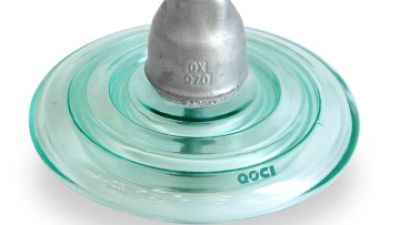
The U70BS/255/127/320 IEC suspension insulator is designed for reliable insulation and mechanical support on high-voltage overhead transmission lines. Its cap-and-pin structure combines a toughened glass insulating body with a galvanized metal cap, ball, and fiber or steel pin connection. The U70BS designation commonly corresponds to a 70 kN mechanical load class, while the 255, 127, and 320 configuration values identify key electrical and dimensional requirements for system matching. The CTV254 profile provides a carefully shaped surface that helps maintain insulation performance under wet, dusty, or polluted conditions.

During operation, the glass body offers strong resistance to weathering, ultraviolet exposure, temperature variation, and aging. Its transparent material also makes visual inspection practical, allowing damaged units to be identified more easily during line maintenance. Manufactured to IEC requirements, the insulator can be selected for transmission towers, substation connections, and medium- to high-voltage distribution structures where dependable suspension and stable electrical clearance are essential.

The U70BS 70 kN type is suitable for conductor strings exposed to wind, ice, vibration, and normal service tension. Ball-and-socket fittings simplify string assembly and replacement, while the standardized dimensions support compatibility with matching tower hardware and conductor arrangements. Proper selection should consider operating voltage, creepage distance, pollution level, mechanical loading, and the required string length.

FAQS

What does “green glass” actually mean?

The color often comes from iron content in the glass. It does not prove environmental performance. Request composition data, recycled-content statements, and environmental documentation. Color proves little.

Which technical requirements should be specified for toughened glass?

Specify compliance with IEC 60383-1 and state the rated mechanical load. Also define puncture resistance, thermal-shock performance, and power-frequency test levels. Require residual-stress testing and controlled fragmentation evidence.

How can each glass disc be traced?

Require a batch code linking each disc to furnace conditions and inspection records. The code should connect raw materials, production dates, test results, and rejection records. Weak traceability creates larger maintenance risks.

What should be checked in cap-and-pin assemblies?

Define the cap material, pin diameter, galvanizing thickness, cotter-pin design, and locking method. Also specify creepage distance, arcing distance, corona-ring provisions, and hardware compatibility. Small fittings matter.

Which supplier documents deserve careful review?

Request a current ISO 9001 certificate covering design, production, and inspection activities. Verify its certificate number, validity period, issuing body, and registered manufacturing address. A certificate alone is not enough.

What should complete type-test records contain?

Each report should identify the model, rated voltage, test standard, laboratory, date, and sample details. Compare tested dimensions and fittings with current production drawings. A polished report can still identify the wrong sample.

Which routine tests should cover every production batch?

Records should show the lot, test date, equipment, operator, and measured result. Visual checks should find cracks, chips, bubbles, stains, and uneven surfaces. Dimensional checks protect string alignment. Records matter.

How should mechanical load ratings be evaluated?

Common ratings range from 40 to 300 kN, but ratings are not routine proof loads. Request the test method, loading speed, holding time, and failure criteria. Check current machine calibration records and request raw results when possible.

Why is fragmentation safety important?

Toughened glass should break into smaller particles after severe damage. This can reduce large, sharp fragments, but it does not remove every hazard. Workers still need eye protection, gloves, controlled access, and safe collection procedures.

What packaging and delivery requirements should be included?

Require protection against chipped edges, impact marks, and damaged metal fittings. Inspect wooden crates and record visible damage before installation. Review the specification after the first delivery. It may be imperfect.

Conclusion

Sourcing Green Glass Electrical Insulators requires a structured evaluation of electrical, mechanical, quality, and commercial requirements. Start by defining the system voltage, mechanical load, environmental conditions, and applicable IEC 60383-1 requirements. Specify toughened glass, cap-and-pin construction, compatible fittings, and the appropriate number of insulator discs for 10–12 kV unit ratings. Suppliers should demonstrate ISO 9001 certification, reliable type-test records, routine testing procedures, and verified performance across required mechanical loads from 40 to 300 kN. Fragmentation safety and consistent glass quality are also essential for dependable service.

The purchasing review should compare minimum order quantities, expected lead times of approximately 4–12 weeks, and total landed cost, including transport and duties. Before approval, request samples and confirm dimensional accuracy, traceability, documentation, protective packaging, and delivery capability for projects ranging from 110 to 500 kV. A clear inspection and acceptance plan helps ensure that the selected insulators meet technical specifications, arrive safely, and provide stable long-term performance.

Amelia

Amelia

Amelia is a highly skilled marketing professional at Jiangxi QOCI Electric Co. Ltd., a leading manufacturer of glass insulators established in December 2002 in Jiangxi Province, China. With a profound understanding of the company’s products and an unwavering commitment to excellence, she plays a......
Previous Why Choose CTV 255 Glass Isolators for Global Buyers?