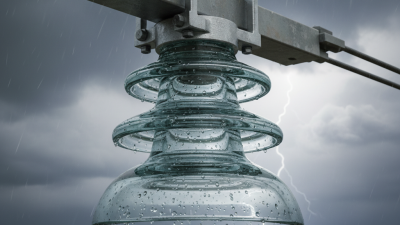
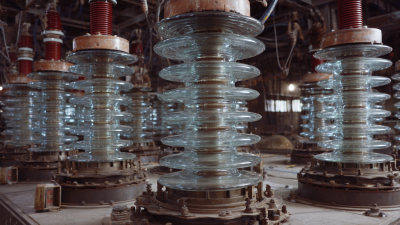
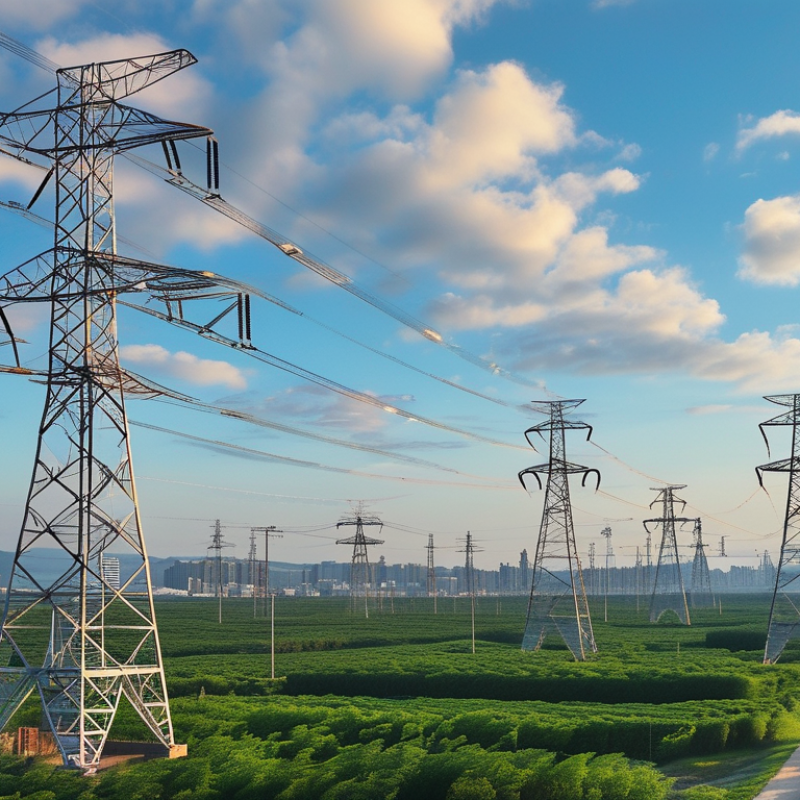
Ht Insulators might not be the most glamorous part of the electrical world, but let me tell you—they're absolutely essential for making sure power gets from point A to point B reliably. I came across a report from Global Market Insights that predicts the insulator market will hit around $13.2 billion by 2026. That’s a pretty clear sign that everyone’s really focused on more efficient energy solutions these days. And folks like Dr. James Lee—a real expert in the field—keep emphasizing that HT insulators are *crucial* for dependable electrical systems.
If you're working in the industry, understanding how these insulators work is kind of a must. Basically, they’re built to handle really high voltages, keeping things stable and safe. Their special materials and clever design help cut down on energy waste too. But here’s the thing—poor handling or incorrect installation can cause pretty serious operational problems, as recent studies have pointed out.
Now, while the newer, more advanced HT insulators do a better job, they still come with their own sets of challenges—like maintenance woes or environmental wear and tear. Dr. Lee keeps stressing the importance of innovation, but at the same time, making sure folks actually use these insulators properly is just as important. Ongoing research is key to fixing any flaws in the current models. All in all, finding a nice balance between innovation and proper use is what’s really going to shape the future of HT insulators and energy as a whole.
Understanding High-Temperature Insulators: An Overview
High-temperature insulators (HT insulators) play a crucial role in various applications. They are designed to withstand extreme heat, typically over 1,000 degrees Celsius. These materials excel at preventing heat transfer, ensuring that systems remain efficient and safe.
Understanding the different types of HT insulators helps in selecting the right one for specific needs. Ceramics are a popular option due to their excellent thermal stability. However, they can be brittle. On the other hand, some polymers offer flexibility but may not endure high temperatures as effectively.
**Tips:** When choosing high-temperature insulators, assess the environment they will be exposed to. Consider factors like thermal shock and stress. Testing samples in real conditions can provide valuable insights into their performance. It’s also important to note that not all insulators are equal. Be wary of overselling claims; always look for independent validation.
The Science Behind High-Temperature Insulation Materials
High-temperature insulation materials are crucial in various industrial applications. They work by minimizing heat transfer, which enhances energy efficiency. These materials are designed to withstand extreme temperatures while maintaining their structural integrity. This property makes them essential in industries, such as aerospace, petrochemical, and power generation.
When selecting high-temperature insulators, consider thermal conductivity, temperature limits, and durability. The right choice will improve efficiency and safety. Avoid materials that cannot handle specific conditions, as this can lead to failures. Also, always assess the specific requirements of your project before making a decision.
Tips: Verify the manufacturer’s certifications. This ensures reliability and performance. Conduct regular maintenance on insulation systems. Old materials can degrade and lose effectiveness. Be mindful of installation practices; improper installation may lead to gaps that compromise performance.
Types of High-Temperature Insulators Used in Industries
High-temperature insulators are essential in various industries. They help protect equipment and maintain efficiency. These insulators can withstand extreme temperatures without losing their insulating properties. Understanding their types is crucial for proper application.
Ceramic Insulators are among the most widely used. They can handle high temperatures and resist thermal shock. Their composition often includes alumina, which adds durability. However, they can be brittle and may require careful handling.
Another popular option is mineral wool. This type is lightweight and provides excellent thermal insulation. It can endure high temperatures, making it suitable for furnaces and kilns. Nonetheless, mineral wool can lose its insulating ability when exposed to moisture. This limitation must be considered when selecting an insulator for a specific application.
Applications of High-Temperature Insulators in Various Sectors
High-temperature insulators (HT insulators) play a vital role in many sectors, ranging from energy to aerospace. In the energy sector, these insulators withstand extreme temperatures while ensuring efficient power transmission. According to a report by MarketsandMarkets, the global market for high-temperature insulation materials is projected to reach $5.6 billion by 2025, reflecting a compound annual growth rate of 5.8%. This growth is largely driven by increasing demand for energy-efficient solutions and advancements in material technology.
In aerospace applications, HT insulators are crucial for thermal protection. They safeguard spacecraft and their components from harsh re-entry conditions. NASA's research highlights that effective thermal insulation can reduce the risk of failure during critical missions. However, the selection of materials is challenging. Variable performance in extreme conditions complicates the decision-making process for engineers.
Industrial processes also rely on high-temperature insulation. In manufacturing, keeping operations at optimal temperatures is essential for equipment longevity. Companies need to constantly evaluate the performance of existing insulation technologies. They face a dilemma: balance cost against insulating ability. As industries push for sustainability, the need for reliable HT insulators remains paramount.
Applications of High-Temperature Insulators in Various Sectors
This bar chart illustrates the applications of high-temperature insulators across different sectors, showcasing their importance in industrial and technological advancements.
Mechanisms of Thermal Resistance in High-Temperature Insulators
High-temperature (HT) insulators are critical components in industrial applications, particularly in sectors like aerospace and energy. Their efficiency hinges on their thermal resistance capabilities. The mechanisms of thermal resistance in these insulators encompass several intricate processes, including conduction, convection, and radiation. Each mechanism plays a unique role in how heat is managed within materials.
Conduction, the primary mode of heat transfer, is where heat flows through a material. HT insulators often exhibit low thermal conductivity, which means they resist heat flow. According to a report by the American Society of Mechanical Engineers, advanced ceramic insulators can achieve thermal conductivity values as low as 0.05 W/mK. This figure highlights their effectiveness. However, even the best materials can experience thermal degradation over time, particularly under extreme conditions.
Convection is another aspect that influences thermal resistance. Insulation materials can trap air pockets, reducing heat transfer through convection. It’s a common misconception that thicker materials always provide better insulation. Research published in the Journal of High Temperature Materials shows that optimizing thickness can sometimes improve efficiency. This requires careful consideration. Additionally, radiative heat transfer can become significant at high temperatures, depending on the surface characteristics of the insulator. Understanding these mechanisms can lead to breakthroughs in HT insulator design.
Testing and Evaluating the Performance of Ht Insulators
Testing and evaluating the performance of high-tension (Ht) insulators is crucial for ensuring electrical safety and system reliability. These insulators must withstand various environmental stressors. Different tests can simulate real-world conditions. For instance, thermal cycling tests assess the material's ability to handle temperature fluctuations. Additionally, electrical breakdown tests help measure the insulation's dielectric strength.
Field testing is another essential component. It provides insights into how the insulators perform under operational stress. Insulators experience pollution, moisture, and mechanical pressure. Regular inspections can reveal hidden issues. Over time, wear and degradation may alter their performance. Furthermore, unexpected failures can arise, highlighting the need for thorough evaluations.
Finally, documenting test results is vital for future reference. It establishes benchmarks and trends over time. Continuous monitoring ensures that any decline in performance is addressed immediately. By adopting a proactive approach, utilities can enhance reliability. Relying on data-driven evaluations fosters a deeper understanding of insulator performance. This allows for informed decision-making regarding maintenance and replacement schedules.
Future Trends and Innovations in High-Temperature Insulation Technology
High-temperature (HT) insulation technology is rapidly evolving. With increasing energy demands, industries seek materials that can withstand extreme conditions. According to a recent report from MarketsandMarkets, the global high-temperature insulation market is projected to grow from $4.1 billion in 2023 to $5.8 billion by 2028. This growth is driven by a shift towards energy efficiency and sustainability in various sectors.
Innovation in HT insulation materials is notable. Advanced ceramics and aerogels are at the forefront. These materials not only resist heat but are also lightweight. Studies suggest aerogels can outperform traditional insulation, offering thermal conductivity as low as 0.013 W/m·K. Industries are increasingly adopting these materials for improvement in thermal performance. However, production costs can be high, hindering wider application.
Future trends indicate a blend of smart technology with insulation. Systems integrating sensors could monitor temperature variations in real-time. This would enhance safety and efficiency in processes. Yet, challenges in material durability and long-term performance remain. The balance between innovation and practical application is crucial for the industry’s future.
Optimizing High Voltage Line Performance with 120kN U120BD Double-Shed Type Glass Insulators: A Comprehensive Guide
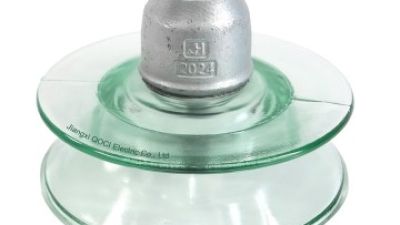
In the pursuit of optimizing high voltage line performance, the selection of the right insulator is crucial. The 120kN U120BD double-shed type glass insulators stand out for their robust design and reliability under extreme conditions. These insulators, designed according to IEC standards, are exceptional in offering superior electrical insulation and mechanical stability. With a capacity to withstand various environmental challenges, they effectively mitigate issues related to contamination and moisture, enhancing the longevity and efficiency of high voltage transmission lines.
Complementing the U120BD insulators are products like the U120BLD double-shed type glass insulators, also engineered to ensure high performance. Their anti-fog capabilities minimize disruption caused by weather, while the toughened structure allows for exceptional durability. Additionally, the two-winged glass suspension insulators, such as the PSD-120 B type, provide versatile solutions for different line configurations, ensuring that the infrastructure remains secure. By incorporating these advanced insulator types, utility providers can significantly improve grid resilience and operational efficiency, ultimately leading to more reliable energy delivery.
FAQS
: They are essential in energy and aerospace sectors for efficient heat management and thermal protection.
They manage heat through conduction, convection, and radiation, minimizing heat transfer.
Low thermal conductivity is key. Advanced ceramics can achieve values as low as 0.05 W/mK.
Not necessarily. Optimizing thickness can sometimes enhance efficiency, contrary to common belief.
Increased energy needs and a push for sustainability drive innovation and usage in various industries.
Variable performance in extreme conditions complicates choices, requiring careful consideration by engineers.
Smart technology integration could allow real-time temperature monitoring, enhancing safety and efficiency.
Yes, materials can degrade over time under extreme conditions, posing a risk for long-term use.
High costs hamper wider application, limiting the potential benefits of advanced materials in industries.
The focus on energy efficiency and the development of lightweight materials like aerogels is increasingly prominent.
Conclusion
High-Temperature Insulators (Ht Insulators) play a crucial role in various industries by providing effective thermal resistance in high-stress environments. This overview explores the science behind these advanced materials, highlighting their properties and the mechanisms that allow them to withstand extreme temperatures. Various types of Ht Insulators are utilized across sectors such as aerospace, automotive, and energy, demonstrating their versatility and importance.
The article delves into the performance evaluation of Ht Insulators, discussing testing methods that ensure reliability and efficiency. Furthermore, it addresses emerging trends and innovations in high-temperature insulation technology, indicating a promising future for these materials as demands for energy efficiency and safety in high-temperature applications continue to grow.