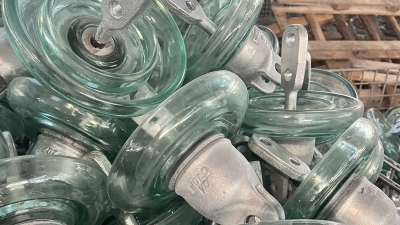
When you think about power transmission systems today, it’s hard to ignore just how important High Voltage Insulator Design really is. With electricity demand booming globally, effective insulators are key to making sure these systems run reliably and efficiently. In fact, a recent market report suggests that the high voltage insulator market could hit around USD 4.56 billion by 2025, which translates to a healthy growth rate of about 6.2% each year. One player really leading the charge in this field is Jiangxi QOC1 Electric Co. LTD., which has been around since December 2002. They have a solid grip on advanced production tech and strong research and development skills, especially when it comes to glass insulators. It’s exciting to see how these high voltage insulators are not just boosting performance in power transmission but also contributing to our efforts in sustainability, helping to ensure we have a reliable and efficient power supply as we move forward into the future.
Significance of High Voltage Insulators in Modern Power Transmission Systems
So, high voltage insulators are actually super important for making sure our power transmission systems work well and reliably. They really are the backbone of our electrical infrastructure! These insulators are built to handle some hefty electrical stress while keeping everything safe and running smoothly. Basically, their main job is to hold up and keep the conductors apart, which helps stop any electrical leakage and keeps the whole transmission network intact. If we don’t have high-quality insulators in the mix, the chance of short circuits and some serious failures goes way up, leading to longer outages and, well, a hit to the wallet for everyone involved.
Nowadays, with our ever-growing energy needs and all the cool tech advancements, high voltage insulators are more important than ever. Thanks to some innovative materials and designs, they’re boosting performance, letting power companies send electricity over long distances with barely any energy loss. And get this—now they’ve even got advanced monitoring tech that checks the insulators’ health in real time. This means we can keep up with maintenance when it’s needed and make them last longer. As our power transmission systems adapt to tackle the challenges of a more sustainable future, high voltage insulators will continue to be key to delivering electricity smoothly to all of us.

Recent Innovations in High Voltage Insulator Materials and Their Impact on Performance
You know, there’s been a lot of exciting stuff going on lately with high voltage insulators. These new materials are really making a difference in how well power transmission systems work. One of the coolest advancements I’ve come across involves composite insulators. They’re being put through some serious testing, especially when it comes to how they hold up against stuff like water droplets hitting them. And here’s the thing: these studies are showing that these new composite materials not only perform great but also have a better resistance to the environmental factors that can mess with traditional insulators. This is a big deal, especially since the need for reliable power transmission is skyrocketing as global electricity use keeps climbing.
And it doesn’t stop there! There are some really innovative designs for insulator profiles being looked at, and they’re using advanced techniques like finite element analysis to see how effective they are in different environments—both clean and polluted ones. Research is revealing that just tweaking the design a bit can actually cut down on those pesky pollution-induced flashovers. It really highlights how important it is to keep pushing the envelope with new materials and designs to boost the reliability of electric insulators.
At Jiangxi QOCl Electric Co. Ltd., we’re all about taking our know-how with glass insulators and weaving these new advancements into what we do. We want to make sure we’re staying on top of the industry’s demands while also keeping things sustainable. It’s an exciting time to be in this field!
Global Market Trends for High Voltage Insulators: Growth Projections for 2025
You know, the global market for high voltage insulators is really on track to grow quite a bit in the next few years! It’s projected to jump from about $3.93 billion in 2020 to around $5.84 billion by 2025. That’s a hefty compound annual growth rate (CAGR) of roughly 8.3%. What’s driving this boom? Well, it’s mainly the rising demand for efficient power transmission systems, especially in those emerging markets. Plus, with all the renewable energy projects popping up and the pressing need to modernize those aging electrical infrastructures, it’s no surprise that we’re seeing this upward trend.
As the industry keeps evolving, it’s super important for folks working in power transmission to stay on top of the latest tech advancements. For example, ceramic and composite insulators are really taking off lately. They’re prized for their top-notch performance and durability, especially when the weather is at its worst. Oh, and here’s a quick tip: when you’re picking out insulator materials, always think about the environmental factors in your area. That can play a huge role in how well they hold up over time.
Also, the movement towards smart grids and automation in power distribution is definitely shaking up the insulator market. By using advanced sensors and monitoring systems, companies can boost the reliability of their transmission lines and even cut down on maintenance costs. One more tip: if you invest in high-quality, innovative insulator designs, you could save a ton on operation costs while also improving the overall efficiency of your power transmission systems.
Case Studies: Successful Implementations of Advanced Insulator Designs in Diverse Regions
You know, innovative designs for advanced insulators are super important if we want to boost how well and reliably power transmission systems work. There are some really cool case studies out there from different parts of the world that show just how effective high voltage insulators can be when dealing with some of the unique challenges posed by different environments. For example, in places that get hit hard by extreme weather, using specialized glass insulators has really helped improve durability and lower maintenance costs. These improvements not only make sure we have a steady power supply but also help lengthen the life of our transmission infrastructure, which is pretty awesome!
At Jiangxi QOCl Electric Co. Ltd., we’re pretty proud of our top-notch production technology and solid research capabilities in the glass insulator space. Our glass and circuit insulators are being used in all sorts of applications around the globe, and it really highlights our dedication to innovation and quality. By continuously investing in R&D, we’re always on the lookout for ways to come up with solutions that keep up with the changing needs of the energy sector.
Tip 1: When picking out insulators, be sure to think about the environmental conditions and the electrical loads you expect. It'll really help you get the most efficiency out of them.
Tip 2: Setting up smart monitoring systems can give you an early heads-up about any potential insulation failures, which means you can dodge those annoying outages and avoid expensive repairs.
Tip 3: Don’t hesitate to team up with manufacturers like QOCI, who focus on customized insulator solutions, to find the perfect match for your specific transmission challenges.
Challenges and Solutions in High Voltage Insulator Maintenance and Reliability
You know, keeping those high voltage insulators in check is super important for how smoothly our power transmission systems run. Recent stats really hammer this point home—about 30% of outages are due to insulation failures! That’s a big deal, right? It just shows how crucial it is to have regular inspections and come up with creative maintenance strategies to make sure everything’s running at its best. Plus, we’ve got some pretty cool tech these days, like drone inspections. They’re fantastic for checking out energized insulator chains, especially in those high-voltage areas where traditional methods can be pretty risky.
On top of that, there’s been some exciting stuff happening with machine learning. It’s actually helping us figure out pollution levels on high voltage insulators by analyzing leakage currents. In some tests, these machine learning models have nailed over 90% accuracy in spotting contaminated insulator conditions. That’s a game-changer for maintenance! As we see the demand for reliable electricity climbing higher, with the global switchgear market set to explode from 2025 to 2035, tackling the maintenance challenges for high voltage insulators is going to be super important. If we can get this right, utilities can keep the lights on and extend the lifespan of our critical infrastructure.
Innovative Applications of Best High Voltage Insulator Design in Power Transmission Systems - Challenges and Solutions in High Voltage Insulator Maintenance and Reliability
| Parameter | Value | Challenges | Solutions |
| Insulator Type | Porcelain | Susceptible to cracking | Regular visual inspections & Non-destructive testing |
| Voltage Rating | 110 kV | Electrical stress leading to failure | Enhanced design for stress distribution |
| Maintenance Interval | 6 months | Environmental contamination | Predictive maintenance strategies |
| Insulator Material | Composite | Degradation over time | Using high-performance materials |
| Failure Rate | 0.5% per year | Natural disasters impact | Improved design resilience |
Future Outlook: Integrating Smart Technology with High Voltage Insulator Systems
In the evolving landscape of power transmission systems, integrating smart technology with high voltage insulator systems represents a promising frontier. As industries move towards smarter grids, the role of advanced insulators becomes increasingly crucial. According to a report by Allied Market Research, the global market for high voltage insulators is projected to reach $8.8 billion by 2025, driven by the need for reliable and efficient power transmission. Jiangxi QOCI Electric Co. Ltd., with its expertise in glass insulators, is strategically positioned to contribute to this growth by innovating designs that not only meet current technical standards but also embrace smart technology.
The integration of sensors within high voltage insulators can provide real-time monitoring of performance and environmental conditions, enabling predictive maintenance and reducing the risk of outages. Additionally, smart insulators can be designed to communicate with grid management systems, optimizing the flow of electricity and enhancing overall system reliability. For instance, companies implementing smart insulator technology have reported a 30% reduction in maintenance costs, as highlighted in a recent report by the Electric Power Research Institute.
Tips: When considering new technologies for insulator design, focus on materials that offer high durability and low maintenance while being compatible with emerging smart technologies. Collaboration with research institutions can also accelerate the development of innovative solutions tailored for the next generation of power transmission.
The Essential Role of U70C Ground-wires Type Suspension Glass Insulators in Modern Electrical Infrastructure
The Essential Role of U70C Ground-wires Type Suspension Glass Insulators in Modern Electrical Infrastructure
In the ever-evolving landscape of electrical infrastructure, the U70C ground-wires type suspension glass insulator has emerged as a pivotal component for maintaining the reliability and efficiency of power transmission systems. Designed to withstand extreme conditions, these insulators are critical in supporting overhead power lines, ensuring safety and longevity in electrical networks. According to the International Electrotechnical Commission (IEC), glass insulators tend to have superior electrical performance, offering high insulating strength and resistance to environmental factors like UV radiation and pollution.
The use of U70C glass insulators is particularly advantageous due to their lightweight nature and mechanical durability. Industry reports indicate that glass insulators can withstand mechanical loads of up to 100 kN, making them ideal for long-span applications. Additionally, their resistance to aging and low maintenance requirements contribute to overall cost-effectiveness in utility operations. A study by the Electric Power Research Institute (EPRI) highlighted that utilizing glass insulators can reduce maintenance costs by up to 30%, reinforcing their essential role in modern electrical infrastructure.
Furthermore, the U70C ground-wires type is engineered to support multiple grounding wires, which aids in enhancing the safety and stability of power lines during adverse weather conditions. The integration of these insulators into existing electrical systems not only boosts resilience against natural disasters but also aligns with global sustainability goals, as they are made from recyclable materials. Overall, the U70C ground-wires type suspension glass insulator is paramount for advancing the reliability and sustainability of today’s electrical infrastructure.
FAQS
: The primary function of high voltage insulators is to support and separate conductors, preventing electrical leakage and maintaining the integrity of the transmission network.
High voltage insulators are crucial for reliability because they help to withstand extreme electrical stress, preventing risks of short circuits and failures that can result in outages and financial losses.
Innovative materials and designs enable high voltage insulators to transmit electricity over vast distances with minimal energy loss, thereby improving efficiency in power transmission systems.
The incorporation of advanced monitoring technology allows for real-time assessment of insulator health, which ensures timely maintenance and extends the lifespan of the insulators.
When selecting insulators, it is essential to consider both the environmental factors and the expected electrical loads to maximize efficiency and durability.
Companies that have implemented smart insulator technology have reported a 30% reduction in maintenance costs, thanks to predictive maintenance enabled by real-time monitoring.
Specialized glass insulators have shown to enhance durability and reduce maintenance costs in areas prone to extreme weather conditions, ensuring uninterrupted power supply.
The global market for high voltage insulators is projected to reach $8.8 billion by 2025, driven by the growing need for reliable and efficient power transmission.
Collaborating with manufacturers specializing in customized insulator solutions can ensure the best fit for specific transmission challenges, enhancing overall system effectiveness.
Focusing on materials that offer high durability and low maintenance, along with collaboration with research institutions, can accelerate the development of solutions tailored for next-generation power transmission systems.