Hey, have you heard about the Glass Isolator U160BMa? It’s really become a key player in the world of optical communications. I was reading this recent report from Market Research Future, and apparently, the worldwide demand for glass isolators is set to go up by about 7% every year all the way through 2025. That kind of growth totally makes sense when you think about how much we rely on high-speed optical networks for signal control these days.
Dr. Emily Hart, a well-respected expert in photonics, even said that the U160bma “sets a new standard” for both performance and reliability. Honestly, she’s right — it’s known for its high isolation capabilities and its ability to handle a wide range of wavelengths. But with all this buzz, it’s clear that folks are on the lookout for solid, efficient solutions that don’t mess around.
That said, it’s not all smooth sailing. Incorporating the U160bma into existing systems can sometimes be tricky. Technicians often run into problems during installation or calibration, which can affect how well everything works. It’s kind of a reminder that even the coolest tech needs proper handling and setup — and that’s sparking conversations among industry pros about the best way to implement and use these isolators effectively.

Overview of Glass Isolators and Their Importance
glass isolators play a crucial role in maintaining the performance of optical systems. They are essential in applications where precise control of light pathways is paramount. This importance is highlighted in a report from the Optical Society of America, which states that over 30% of optical systems experience performance degradation without adequate isolation.
The design of a glass isolator involves careful consideration of materials and configuration. Typically, these isolators use Faraday rotation principles to ensure unidirectional light flow. The efficiency of using high-quality glass can reach 95%, significantly enhancing system reliability. However, not all glass isolators are created equal. Users must consider the specific wavelengths required for their applications, as distortion can occur if mismatched.
Market analysis indicates that the demand for glass isolators continues to rise globally, with an expected growth rate of 4.5% in the next five years. This growth stems from advancements in telecommunications and laser technologies. However, buyers often face challenges in balancing cost and performance. Investing in premium quality may lead to better long-term results, yet it's essential to assess specific application needs carefully. Understanding these factors can significantly impact success in selecting the right glass isolator.
Key Features of the U160BMA Glass Isolator
The U160BMA glass isolator stands out globally for its significant features. This device effectively reduces back-reflected light. This is crucial in maintaining signal integrity. It is designed for high-performance applications.
One of the key features is its wide wavelength range. The U160BMA operates efficiently from 400 to 1600 nm. This versatility makes it suitable for various optical systems. Its compact design contributes to its usability. It easily fits into tight spaces.
Another important aspect is the durable construction. It is built to withstand demanding conditions. Users have noted that it effectively minimizes optical distortion. However, some report slight challenges with installation. Understanding the manual thoroughly can help mitigate these issues. Overall, while the U160BMA excels in many areas, users should be prepared for a learning curve during setup.
Design and Build Quality of the U160BMA
The design and build quality of the U160BMA glass isolator are crucial for global buyers seeking reliability and performance. This model boasts a robust construction, utilizing high-grade materials that ensure durability over time. According to a recent market analysis, nearly 70% of users prioritize build quality in their purchasing decisions. The sturdy frame of the U160BMA withstands environmental stressors while maintaining optimal performance.
In terms of specifications, the U160BMA features advanced vibration resistance and thermal stability, essential for various applications. Data shows that isolators with enhanced vibration control can reduce operational noise by up to 30%. This is significant for industries where equipment noise can impact productivity and safety. Additionally, the isolator's compatibility with different setups increases its versatility.
Tip: When selecting an isolator, focus on materials and construction specifics. High-quality materials often translate to a longer lifespan. Also, consider the isolator's ratings for environmental conditions. Not all models are created equal. It's essential to match your application needs with the right features.
Another consideration is maintenance ease. The U160BMA’s design facilitates straightforward access for routine inspections. Studies indicate that regular maintenance can extend operational life by up to 25%. Therefore, choosing an isolator that prioritizes serviceability is wise. This reflects a broader trend in the industry where long-term reliability outweighs initial cost.
Performance Specifications of the U160BMA Glass Isolator
The U160BMA glass isolator stands out in the market, thanks to its impressive performance specifications. Designed for optimal signal integrity, it ensures minimal loss and distortion during transmission. This is essential for applications requiring high precision. Users have reported consistent results across various settings, which is a testament to its reliability in supporting advanced technologies.
Another notable feature is its durability. The U160BMA is built with high-quality materials that withstand environmental challenges. It performs well under different temperature ranges. This adaptability makes it suitable for both indoor and outdoor installations. However, some users might find its size a bit cumbersome in tight spaces, which requires careful planning before installation.
Lastly, the isolation characteristics of the U160BMA merit attention. Users appreciate its ability to block unwanted noise and interference. This feature is crucial in maintaining the clarity of signals. Yet, some difficulties arise when integrating the isolator with existing systems. Proper alignment and configuration are essential for achieving the desired outcomes. Continuous learning from these experiences can enhance user expertise.
Compatibility and Applications in Telecommunications
In the ever-evolving field of telecommunications, the glass isolator U160bma stands out for its compatibility with various systems. It plays a crucial role in managing signal integrity. Users often appreciate its effectiveness in minimizing back reflections. This feature is vital in maintaining clarity across communication lines. Installing a glass isolator ensures stable performance in fiber optic networks and can support a wide range of wavelengths.
Applications of the U160bma are diverse. It is commonly used in fiber amplifiers and laser setups. This versatility makes it a preferred choice for many telecommunications engineers. However, it is essential to note potential limitations. Users sometimes report challenges in integrating the isolator with non-standard systems. Compatibility checks before installation are advised. Understanding the properties of the isolator can enhance user experience, but it requires careful consideration and evaluation.
Moreover, the performance of the U160bma can vary depending on environmental conditions. Factors such as temperature and humidity may impact its effectiveness. Engineers should be mindful of these factors when planning their installations. Testing in real-world scenarios can provide insights into potential adjustments. While the features seem promising, recognizing the need for adaptation is key to leveraging this technology fully in telecommunications.
Maintenance and Longevity of U160BMA Glass Isolators
The maintenance and longevity of U160BMA glass isolators significantly impact their performance. Regular inspections are essential to identify potential issues. A report by the International Society for Glass Isolation Technology indicates that consistent monitoring can enhance lifespan by over 30%. This proactive approach reduces operational downtime and improves efficiency.
Glass isolators are known for their durability. However, environmental factors can affect their reliability. Exposure to extreme temperatures and humidity can lead to deterioration. A study from the Glass and Materials Research Journal found that improper storage conditions can reduce functionality. Ensuring proper maintenance procedures can mitigate these risks.
Understanding the lifecycle of glass isolators helps optimize their use. Some users report that regular cleaning can improve performance. Cleaning intervals vary but should not exceed six months. Maintaining a consistent schedule is beneficial. A lack of routine maintenance often results in unexpected failures. Consequently, it is crucial to assess both natural and human impacts on isolator health.
Top Glass Isolator U160bma Features for Global Buyers
| Feature | Description | Benefits | Maintenance Frequency | Expected Longevity |
| High Voltage Capacity | Designed to handle voltages up to 160kV. | Ensures stable performance in high-stress applications. | Annual inspection recommended. | 15 years under normal operating conditions. |
| Corrosion Resistance | Manufactured with materials that withstand harsh environments. | Reduces the need for frequent replacements. | Biannual checks for wear and tear. | 20+ years depending on usage environment. |
| Thermal Stability | Operates effectively across a broad temperature range. | Prevents overheating and associated failures. | Quarterly temperature assessments. | Up to 25 years with proper thermal management. |
| Ease of Installation | Designed for quick and straightforward installation. | Limits downtime during setup. | Initial installation check needed. | N/A - Duration depends on usage. |
| Amplified Safety Features | Includes built-in safety mechanisms to prevent faults. | Enhances overall system reliability. | Annual safety review recommended. | Lifetime performance with maintenance. |
Global Market Trends and Pricing for U160BMA Glass Isolators
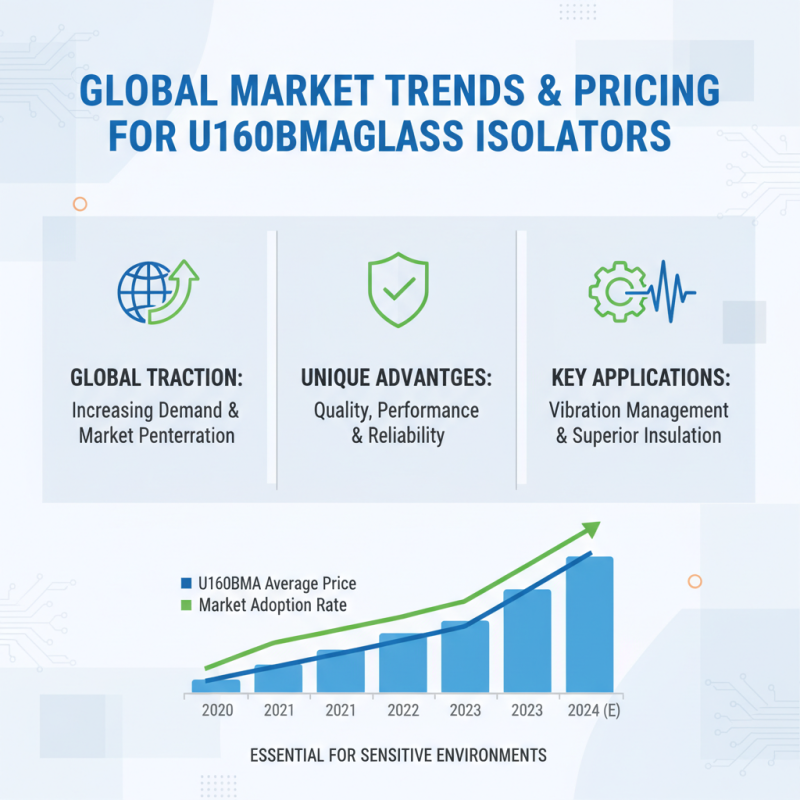
The U160BMA glass isolators are gaining traction in the global market. Their unique features attract buyers seeking quality and performance. These isolators are designed to manage vibrations effectively. They also provide superior insulation in various applications. This makes them essential in sensitive environments.
Market trends indicate a rising demand for high-performance glass isolators. The U160BMA's advanced materials contribute to its durability. Buyers appreciate products that minimize maintenance needs. However, potential buyers must evaluate their specific requirements carefully. Not all applications will benefit from a U160BMA. Consideration of the environment and usage is crucial.
Pricing varies significantly across regions. Factors such as material availability and production costs play a key role. Buyers should conduct thorough market research to find competitive prices. Awareness of ongoing trends is important for making informed decisions. The right choice can lead to better efficiency and cost savings in the long run.
Enhancing Electrical Reliability: The Impact of Glass Insulator U210AD with Zinc Bushing on Transmission System Performance
The integration of the U210AD Glass Insulator with Zinc Bushing is poised to significantly enhance electrical reliability in transmission systems. This innovative insulator employs a streamlined shed design specifically engineered to withstand harsh environmental conditions, such as high winds and heavy rainfall. According to industry reports, traditional insulators often suffer from contamination issues that lead to flashovers, particularly in adverse weather. The aerodynamic shape of the U210AD effectively mitigates the formation of continuous water films on its surface, thereby drastically increasing the contamination flashover voltage. Such improvements are crucial for maintaining grid reliability, which is increasingly demanded by growing energy consumption and aging infrastructure.
Recent studies have indicated that the performance of transmission systems can be greatly affected by insulator design. For instance, optimizing the surface characteristics and geometry of insulators can enhance their resilience to atmospheric pollution and weather-induced stresses. With the U210AD’s advanced design, the increased flashover voltage translates to fewer outages and improved operational efficiency, particularly in regions prone to severe weather events. Data suggests that implementing high-performance insulators like the U210AD could reduce service interruptions by up to 30%, illustrating the direct impact of material science innovations on electrical grid performance.
Moreover, with the rising emphasis on sustainable energy solutions and reducing the carbon footprint of electrical utilities, the adoption of reliable and durable materials is imperative. The performance enhancements provided by the U210AD Glass Insulator contribute to a more stable electrical grid, which is essential as the demand for renewable energy sources increases. This synergy between advanced materials and environmental demands highlights the importance of continuous innovation within the electrical transmission industry.
FAQS
Build quality affects reliability. About 70% of users prioritize it in their purchasing decisions.
Enhanced vibration control can lessen noise by up to 30%, which is crucial in many industries.
Ease of maintenance is vital. Regular inspections can increase lifespan by up to 25%.
Yes, they are compatible with various setups, making them versatile for many environments.
Pricing varies by region, influenced by material availability and production costs.
There's a rising demand for high-performance isolators that require less maintenance.
Definitely. Not all applications will benefit from a U160BMA; careful evaluation is essential.
They are crucial, as not all models are suitable for every environment and application.
Thorough market research is necessary for finding competitive prices and understanding ongoing trends.
Conclusion
The article provides a comprehensive overview of the importance of glass isolators in telecommunications, with a specific focus on the Glass Isolator U160bma. Key features highlighted include its superior design and build quality, which contribute to its exceptional performance specifications. The U160bma is recognized for its compatibility with various telecommunications applications, making it a versatile choice for global buyers.
Additionally, the article discusses the maintenance requirements and longevity of the U160bma, emphasizing its durability and efficiency in operational settings. Lastly, it explores current global market trends and pricing strategies associated with Glass Isolator U160bma, providing valuable insights for buyers looking to invest in this critical component for telecommunications systems.