Leave Your Message
0%

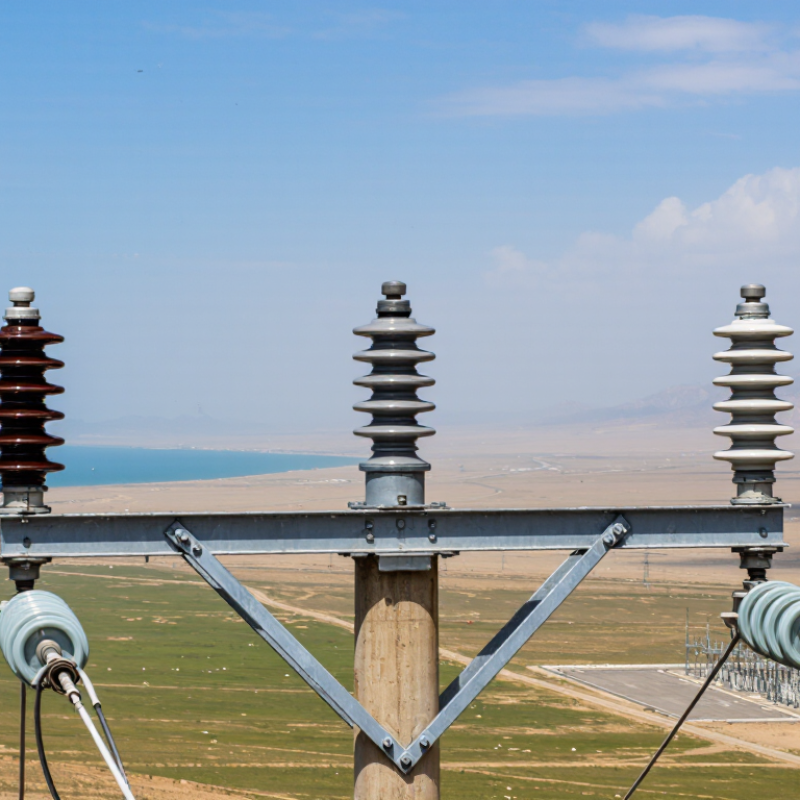
So, why go with 11kv Insulators for power projects around the world? Honestly, a project like that needs way more than just the right voltage rating. You’ve got heat, rain, salt, dust, high altitudes, and all kinds of mechanical stress to think about. The insulation has to hold up through all of it. That’s a big reason 11kV insulators still matter so much—whether we’re talking distribution networks, industrial substations, renewable energy plants, or rural electrification systems.

Dr. R. S. Gorur knows a thing or two about outdoor insulation—he’s a well-known expert in the field and even co-wrote Outdoor Insulation in Electric Power Systems. And he makes a pretty simple but important point: “Insulator performance depends on the service environment, not voltage rating alone.” That’s worth paying attention to. Take an 11kV line along the coast versus one out in a dry inland area—they might need different Creepage Distances. In other words, even small design choices can make a real difference.

Reliable suppliers like Siemens Energy, ABB, and Hubbell Power Systems usually run through electrical strength, mechanical load, pollution performance, and weather resistance. On top of that, engineers really ought to check the relevant IEC standards—IEC 60168 and IEC 60273 are the main ones—plus whatever local grid rules apply. Factory testing definitely helps, but out in the field things can still throw you a curveball. And honestly? That's the uncomfortable part.

Choosing the right 11kV insulators is really a balancing act—safety, service life, maintenance access, and overall project cost all come into play. Porcelain, polymer, and composite options each have their own strengths. But let's be honest: none of them is perfect. The final call should come down to site surveys, verified test data, and good old-fashioned engineering judgment. And don't overlook the basics—clean surfaces, proper fittings, and careful installation can save you from some very costly failures. It's the little details that are easy to underestimate. So, why do 11kV insulators keep helping deliver reliable power? This article digs into that — across all sorts of environments around the world.
Why Choose 11kV Insulators for Global Power Projects?

11 kV Networks: IEC 60038 Defines a 12 kV Highest System Voltage

Why Choose 11kV Insulators for Global Power Projects?

An 11kV network commonly aligns with a 12kV highest system voltage under IEC 60038. This distinction matters. The network’s operating voltage is not the complete insulation design value. Equipment must tolerate temporary overvoltages, switching events, humidity, pollution, and installation errors. Selecting insulators rated only by nominal voltage can create a narrow safety margin. In field inspections, small cracks and loose fittings often become larger reliability problems after repeated rain and thermal cycling.

The International Energy Agency’s Electricity 2024 report states that global electricity demand grew by 2.2% in 2023. It also forecasts roughly 4% annual growth during 2024–2026. More distribution assets will therefore connect factories, renewable plants, and remote communities. For 11kV systems, insulators designed around the 12kV equipment class can support consistent clearances and insulation coordination. IEC 60071 guidance is useful here, especially when engineers assess lightning impulses and local pollution levels. The detail is easy to overlook.

Site Conditions and Field Performance

Site conditions still decide performance. Coastal salt, cement dust, and high-altitude air can reduce surface insulation strength. A ceramic or composite unit may perform differently under the same voltage. There is no universal winner. Engineers should verify creepage distance, mechanical load, ageing behavior, and test records against applicable IEC requirements. The Ember Global Electricity Review 2024 reported that renewables supplied 30% of global electricity in 2023, increasing the need for dependable medium-voltage connections. Yet laboratory data cannot fully reproduce every installation. Field feedback remains essential.

Insulation Coordination: 28 kV AC and 75 kV Lightning-Impulse Ratings

Why Choose 11kV Insulators for Global Power Projects?

An 11kV system needs more than a matching voltage label. Insulation coordination connects equipment ratings with real network stresses. A 28 kV AC withstand rating provides a practical margin against power-frequency overvoltages. The 75 kV lightning-impulse rating addresses short, steep surges from nearby strikes or switching events.

These figures must be read with the complete design. Engineers should check the highest system voltage, earthing method, fault duration, altitude, and pollution severity. Salt mist near a coastal substation can reduce surface performance. Dust can create a conductive path across a dry-looking insulator. Field inspections often reveal details that laboratory tables cannot show. That is why creepage distance, shed profile, and hardware geometry deserve careful review.

Small details matter.

Tips: Confirm whether the 28 kV and 75 kV values represent dry or wet tests, and identify the applicable standard. Review impulse-wave conditions, not only the headline voltage. For polluted locations, use site-specific creepage calculations and inspect drainage around fittings. Installation torque also matters; over-tightened hardware may damage ceramic or composite components. I have seen designs pass paper checks but require adjustment after local weather data was reviewed. This is not a failure of calculation. It shows that insulation coordination should remain an engineering discussion, not a catalogue decision.

Creepage Design: IEC 60815 Uses 16–31 mm/kV Pollution Classes

For 11kV insulators, creepage distance is not a decorative specification. It is the surface path that resists leakage current across contaminated, wet insulation. IEC 60815 links the required distance to pollution severity. Typical specific creepage values range from 16 to 31 mm/kV. Light pollution may use 16 mm/kV, while very heavy pollution can require 31 mm/kV. The correct value depends on the site, not a generic catalog line.

Coastal salt, cement dust, industrial smoke, and agricultural deposits create different electrical risks. During inspections, dry insulators may appear healthy, then flash over after fog or rain. Designers should assess the local pollution class, voltage stress, altitude, washing conditions, and insulator profile. For an 11kV network, calculations must use the applicable equipment voltage basis. Small errors matter. A few missing millimeters can reduce the safety margin.

Reliable selection also requires checking shed spacing, drainage, material aging, and hardware clearances. IEC 60815 provides a disciplined framework, but it cannot replace field evidence. Site photographs, maintenance records, and contamination tests often improve the decision. I would not treat 31 mm/kV as an automatic answer. Oversizing may increase cost and weight, while undersizing invites outages. The uncomfortable part is uncertainty. Pollution changes seasonally, and test conditions never copy every real storm.

Mechanical Selection: IEC 60168 Tests Cantilever Loads and Puncture Strength

Why Choose 11kV Insulators for Global Power Projects?

Global electricity demand is expanding quickly. The IEA Electricity 2024 report projected demand growth of about 4% in 2024 and 2025. This growth increases pressure on medium-voltage networks and their mechanical reliability. For 11kV systems, cantilever strength deserves careful attention. Wind, conductor tension, ice, and installation torque can act together at the insulator base.

IEC 60168 specifies mechanical tests for indoor and outdoor post insulators above 1kV. Its cantilever test checks the declared mechanical failing load under controlled conditions. The result is not a substitute for project calculations. Engineers should compare the test value with actual bending moments, safety factors, and pole movement. Puncture testing is also important for applicable ceramic or glass units. It examines internal dielectric strength, not only surface flashover performance. A higher rating is not automatically safer. Our early design assumptions can be too optimistic when short-circuit forces and uneven conductor loading are ignored.

Tips: Request type-test evidence, not only a catalogue value. Confirm the test standard edition, mounting arrangement, loading direction, and failure mode. Check whether puncture strength matches the selected material. Leave room for contamination, transport damage, and ageing. Small details matter.

Sources: IEC 60168, Tests on Indoor and Outdoor Post Insulators; IEA, Electricity 2024.

Material Comparison: Porcelain, Glass, and Silicone Rubber at 11 kV

At 11 kV, insulator material affects safety, maintenance, transport, and service life. Field inspections show that porcelain remains dependable in many distribution networks. Its dense ceramic body handles mechanical loads and heat well. It is also familiar to utility crews. However, porcelain is heavy, and chipped glaze can expose a path for moisture and contamination. Small defects deserve attention.

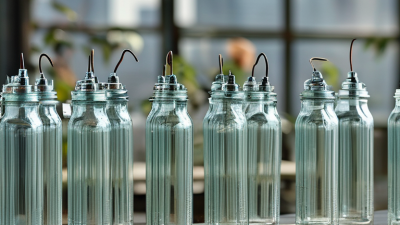
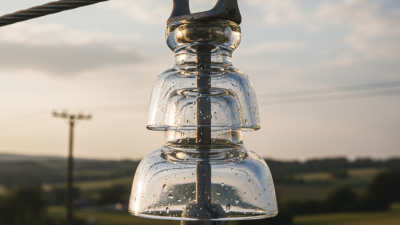
Glass offers a clear visual advantage. Internal damage is often easier to notice because the material can shatter visibly. It also resists aging under normal outdoor conditions. Yet glass can be vulnerable to impact during transport or installation. In coastal areas, salt deposits may still create leakage currents. Transparent does not mean maintenance-free.

Silicone rubber is lightweight and performs strongly in polluted environments. Its hydrophobic surface helps water form beads instead of continuous films. This can reduce flashover risk around dust, salt, and industrial residue. Workers can lift these units more easily onto compact poles. The material needs careful design, though. Poor interfaces, ultraviolet exposure, and installation damage may reduce long-term reliability. That assumption needs testing.

For global projects, engineers should compare creepage distance, mechanical strength, pollution level, altitude, and inspection access. Applicable IEC requirements and local utility specifications should guide acceptance tests. A material that succeeds in a dry inland town may struggle beside a humid coastline. Site evidence matters more than habit.

Global Compliance: IEC 62271-1 Aligns Switchgear Insulation Requirements

Why Choose 11kV Insulators for Global Power Projects?

For global power projects, 11kV insulators must satisfy more than voltage ratings. IEC 62271-1 defines common requirements for AC switchgear above 1kV, including insulation coordination, dielectric testing, clearances, and operational safety. Its framework helps engineering teams compare equipment across different grid environments. Small details matter.

The IEA Electricity 2024 report forecasts global electricity demand will grow by an average of 3.2% annually through 2026. More distribution networks will therefore connect renewable generation, industrial loads, and urban infrastructure. At 11kV, insulators support reliable isolation inside compact switchgear, where humidity, pollution, and thermal cycling can gradually reduce performance. IEC 62271-1 requires verification through power-frequency and lightning-impulse withstand tests. These tests expose weaknesses before equipment reaches a remote substation.

In practice, compliance depends on the complete assembly, not the insulator alone. Engineers should review creepage distance, enclosure design, altitude correction, material aging, and installation records. IEC 62271-1 provides a common technical language, but national rules may add stricter conditions. Field reality differs. A design that passes laboratory testing may still need stronger pollution protection in coastal or dusty locations. CIGRE reliability studies repeatedly identify maintenance quality and environmental stress as major contributors to medium-voltage failures. That finding deserves attention. A slightly conservative 11kV insulation design can reduce unexpected outages, although it may increase initial size and cost.

Lifecycle Performance: Rated Current, Fouling, UV, and Moisture Resistance

Why Choose 11kV Insulators for Global Power Projects?

Lifecycle performance depends on more than voltage rating. An 11kV insulator must support reliable clearances, mechanical loads, and connected equipment under changing conditions. Rated current does not pass through the insulating body, but it affects nearby conductors, clamps, and thermal expansion. Poor fittings can create hot spots. That detail matters.

Field inspections often reveal contamination as the hidden cause of leakage and flashover. Coastal salt, industrial dust, and farm chemicals can form a conductive film on the surface. Longer creepage distances and effective hydrophobic materials can improve fouling resistance. UV exposure also deserves attention. Constant sunlight can age polymers, discolor surfaces, and weaken sealing details. Moisture is persistent. Water enters through damaged interfaces, freezing cycles, or poorly protected hardware. No calculation is perfect.

Tips: Match creepage distance to the site pollution level, not only the nominal voltage. Check rated current requirements for conductors and fittings during peak loading. Request UV and moisture-aging evidence from qualified laboratories. Inspect sheds, seals, and metal interfaces during maintenance visits. Small cracks may remain unnoticed until wet weather arrives. I have seen installation quality undermine an otherwise excellent design, so torque control and clean handling should never be treated as minor tasks.

This chart presents commonly applied engineering reference values for 11 kV distribution systems. The 630 A value represents a typical medium-voltage equipment current class rather than an electrical rating of the insulator itself. Creepage distance should be selected according to site pollution severity, while UV and moisture resistance must be verified through the applicable design and environmental tests.

FAQS

Why is an 11 kV network linked with a 12 kV equipment class?

The operating voltage is not the full insulation design value. Equipment may face switching events, temporary overvoltages, and installation errors.

What environmental conditions affect 11 kV insulator performance?

Salt, cement dust, industrial smoke, rain, and high altitude can weaken surface insulation. Dry conditions may hide serious risks.

What does creepage distance protect against?

Creepage distance is the surface path that limits leakage current across wet, contaminated insulation. Small differences can matter.

How should engineers choose a creepage value?

They should assess the pollution class and site conditions. Typical values range from 16 to 31 mm/kV.

Is 31 mm/kV always the safest choice?

No. It may add cost and weight without solving every problem. Seasonal pollution and local weather still require careful review.

Which site details should be checked before selecting an insulator?

Check altitude, salt exposure, dust, washing conditions, voltage stress, shed spacing, drainage, and mechanical loading.

Can ceramic and composite insulators perform differently?

Yes. Their ageing behavior and contamination response may differ under the same voltage. There is no universal winner.

Why are field inspections important after laboratory testing?

Laboratory tests cannot reproduce every storm or installation mistake. Photographs, maintenance records, and contamination tests reveal practical weaknesses.

What visible problems deserve early attention?

Small cracks and loose fittings deserve immediate review. Repeated rain and thermal cycling can enlarge minor defects.

What is an easy mistake in 11 kV insulation design?

Using nominal voltage alone can create a narrow safety margin. I might still overlook changing pollution conditions.

Conclusion

Choosing 11kv Insulators for global power projects requires more than matching a voltage label. In 11 kV networks, IEC 60038 identifies 12 kV as the highest system voltage, while insulation coordination commonly considers 28 kV power-frequency withstand and 75 kV lightning-impulse withstand levels. Creepage distance should be selected according to pollution severity, with IEC 60815 guidance typically ranging from 16 to 31 mm/kV. Mechanical reliability is equally important, as IEC 60168 addresses cantilever loading and puncture-strength testing.

Project teams must also compare porcelain, glass, and silicone rubber based on strength, weight, contamination performance, UV exposure, and moisture resistance. IEC 62271-1 further supports consistent insulation requirements for associated switchgear. By considering rated current, environmental fouling, climate, installation conditions, and expected service life, engineers can select 11kv Insulators that provide dependable electrical isolation, mechanical stability, and long-term performance across diverse power networks.
Charlotte

Charlotte

Charlotte is a dedicated marketing professional at Jiangxi QOCI Electric Co. Ltd., a leading company founded in December 2002 and located in Jiangxi Province, China. With a profound expertise in glass insulators, Charlotte plays a pivotal role in showcasing the company’s innovative products and......
Previous What Is a High Voltage Isolator and How Does It Work?