




RTV Silicone Coatings: Reliable, Long-Lasting Pollution Performance for Grid Insulators
Combining the hydrophobicity of composite Insulators with the durability of porcelain and glass
A technical review of room temperature vulcanized (RTV) silicone coatings confirms that these coatings deliver significantly higher flashover voltages and lower leakage currents even under severe contamination, while cutting the cost of routine washing. The findings position RTV coating as a practical, cost-efficient solution for utilities operating in heavily polluted environments.
Environmental pollution has long been a decisive factor in the specification of grid insulators. Because of their hydrophobicity, composite insulators offer exceptional pollution performance — a characteristic that drove their rapid adoption through the 1990s and 2000s. Before that, porcelain and glass insulators dominated harsh environments, but they required regular washing to combat surface contamination at considerable cost.
It soon became clear, however, that while composite insulators perform better under pollution, porcelain and glass outlast them by a wide margin. Utilities therefore began looking for a way to combine the pollution performance of composites with the strength and longevity of porcelain and glass — and RTV coating emerged as the answer.
- From Composite Insulators to RTV Coating
Engineers began developing RTV in the 1960s, although the first widespread implementation did not take place until the late 1980s. Adoption was initially low, but the technology has since been refined continuously, building an impressive record of field performance and longevity.
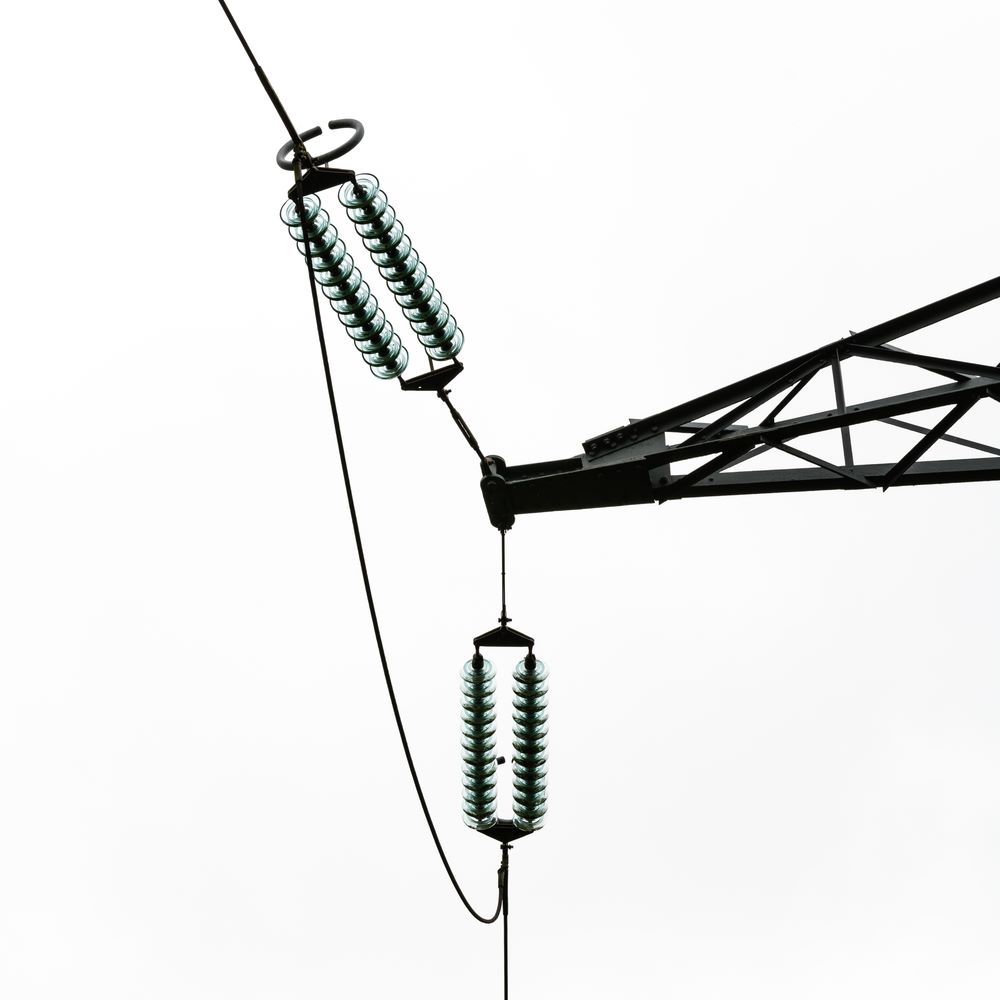
RTV silicone is a liquid polymer that vulcanizes when exposed to moisture in the air. Vulcanization is a chemical process that forms crosslinks between individual polymer chains; depending on crosslink density, the resulting material can be more elastic or more rigid. Applied to insulators at a thickness of only a few hundred micrometres, liquid RTV silicone enhances surface hydrophobicity, suppressing leakage current and increasing flashover resistance under contamination.
▲ Figure 1 RTV silicone coating applied to insulator surfaces
- Performance: Data-Driven Results
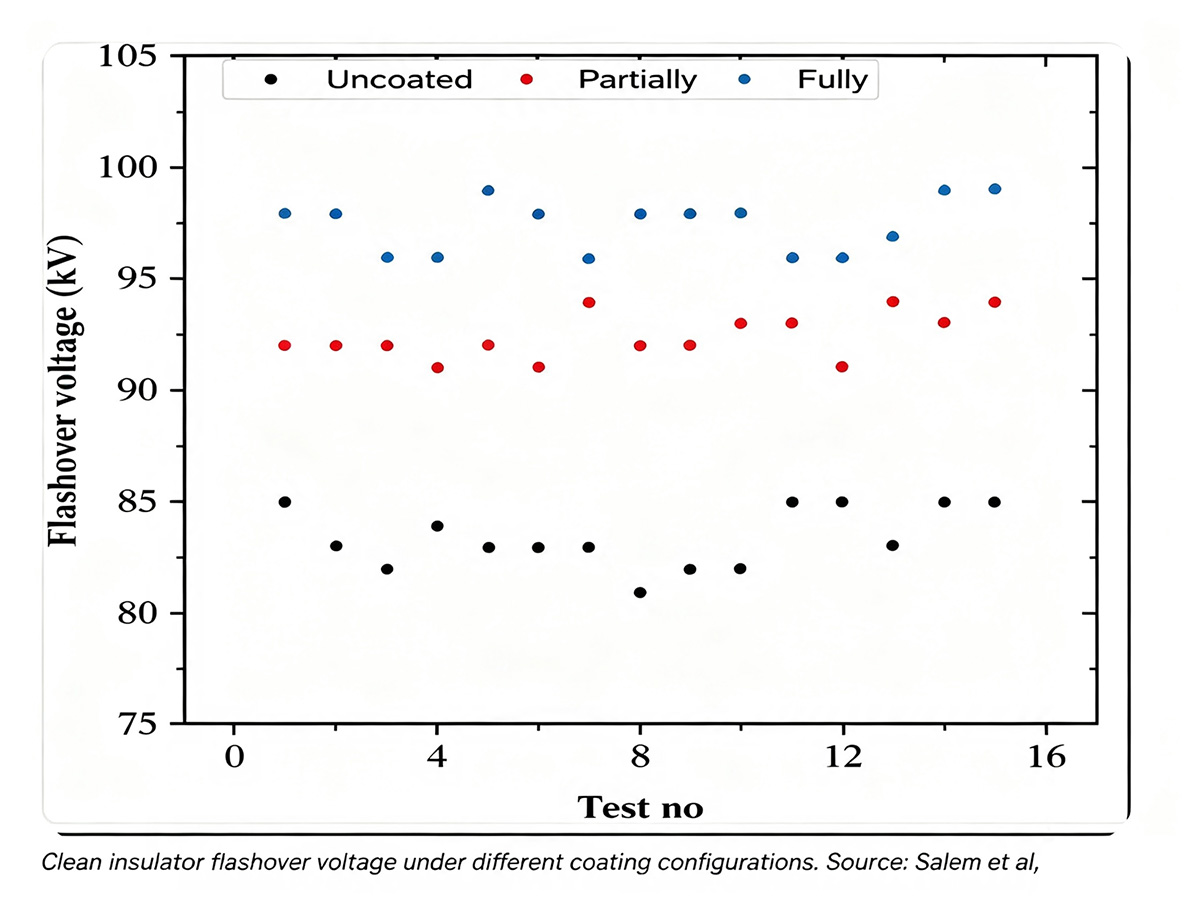
Higher flashover voltage. RTV coatings significantly improve the flashover voltage of insulators. Studies show that fully coated insulators can achieve flashover voltages of up to 97.47 kV, compared with 83.4 kV for uncoated insulators — a 16.9% improvement. Even partial coating yields a 10.79% increase. Under polluted conditions, RTV coatings maintain higher flashover voltages, with increases of up to 15.5% depending on the severity of contamination.
▲ Figure 2 Flashover voltage improvement with RTV coating
Hydrophobicity and pollution resistance. The hydrophobic nature of RTV coatings prevents the formation of a continuous water film on insulator surfaces, reducing surface conductivity and the likelihood of flashover. This property is maintained over time through the migration of low molecular weight siloxanes to the surface, which encapsulate contaminants and restore hydrophobicity even after exposure to pollutants.
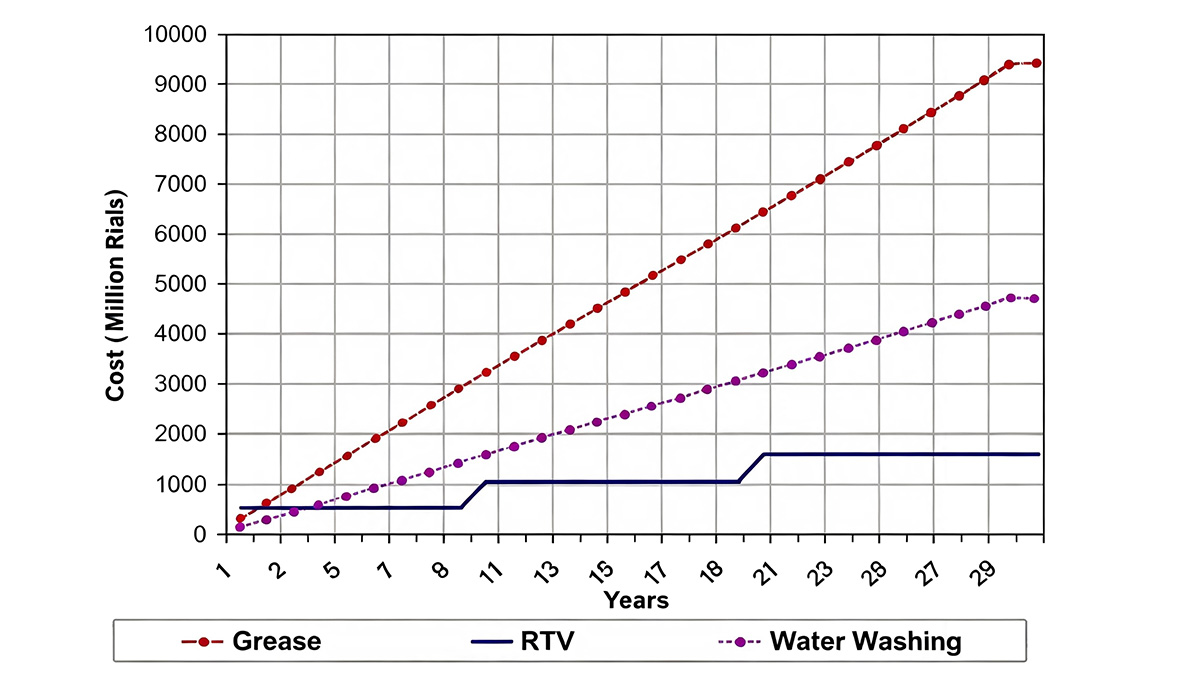
Lower life-cycle cost. Compared with the greasing and washing required by porcelain and glass insulators, RTV coating offers a more economical, lower-maintenance solution. A cost comparison of the three approaches is shown in Figure 3.
▲ Figure 3 Cost comparison: RTV coating versus greasing and washing
- Application Scenarios
RTV coating is suitable for both line and substation applications, and can be applied either during manufacture or in situ. Its primary application is deployment in heavy, very heavy and extreme pollution conditions.
- Life-Cycle Management: Ageing, Inspection and Recoating
The ageing behaviour and life expectancy of a coating are heavily influenced by coating type, application quality and environmental conditions. Ageing is characterised by reduced hydrophobicity, peeling and fading of the coating. According to CIGRE, the following conditions may lead to premature ageing of RTV coatings:
- Low-quality coating, inadequate coating material, or inadequate coating thickness and uniformity
- Environmental extremes
- Prolonged presence of corona and leakage current
- Extreme contamination that impedes hydrophobicity transfer
- Inadequate Insulator Design, with a Unified Specified Creepage Distance (USCD) much lower than required
Regular inspection of RTV-coated insulators is therefore essential to ensure continued optimal performance and hydrophobicity. An example of a maintenance schedule for insulators in a harsh environment is shown in Figure 4.
The functional end-of-life of RTV is marked by an irreversible loss of hydrophobicity, often caused by corona or environmental degradation. Testing methods such as salt fog or accelerated weathering provide useful insights into performance, but they cannot reliably predict service life. At the end of life, recoating is a feasible way to restore functionality — although the ultimate cost must be evaluated on a case-by-case basis.
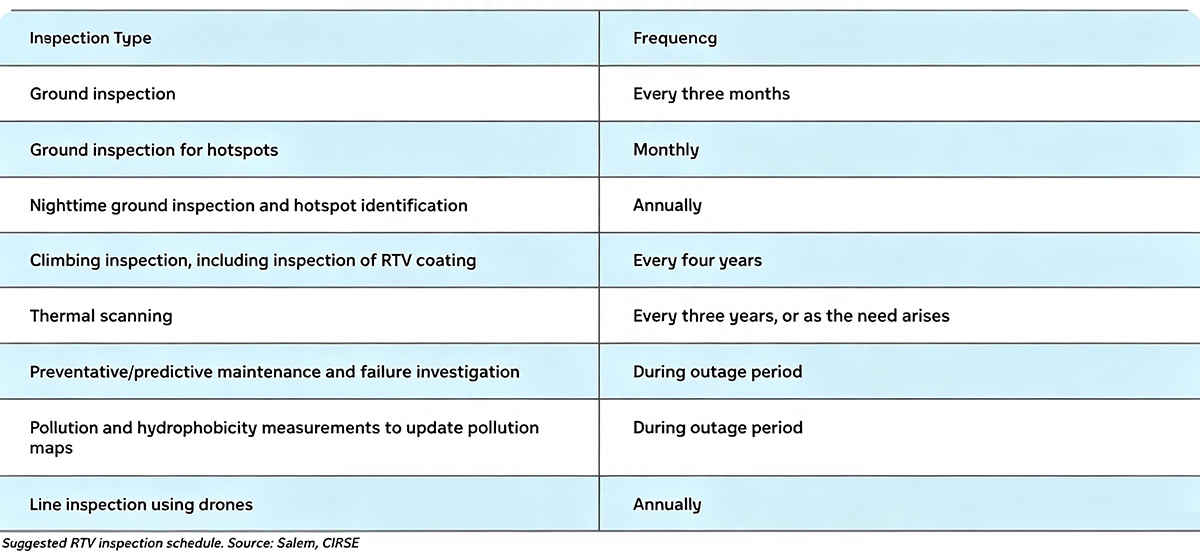
▲ Figure 4 Example inspection and maintenance schedule for RTV-coated insulators in harsh environments
Conclusion
RTV coatings have emerged as a practical and efficient answer to the challenge that environmental pollution poses to electrical insulators. By combining the hydrophobic properties of composite insulators with the mechanical strength and durability of porcelain and glass, RTV technology bridges the gap between pollution performance and service lifetime. While long-term success depends on proper insulator design, application quality, environmental conditions and consistent maintenance, RTV coatings give utilities a reliable way to enhance system reliability and reduce operational costs in polluted environments.
QOCI ELECTRIC will continue to advance external insulation technologies, delivering reliable products and services that support the safe and stable operation of the grid.